Judge dismisses council’s application to send Sheffield tree protester to jail – Yorkshire Post


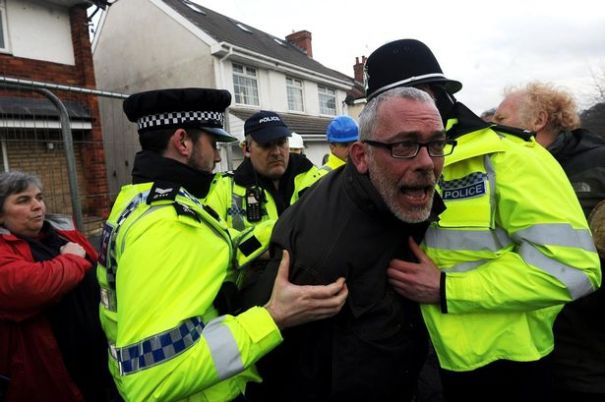
Sheffield Council’s application to send an anti tree-felling protester to jail for contempt of court has been dismissed by a judge – with his ruling highlighting the chaotic scenes which unfolded between security guards and campaigners on a normally quiet city street.n anti Paul Brooke, co-chair of the Sheffield Tree Action Groups, had been accused of breaking a civil injunction which prevents protesters going inside ‘safety zones’ around trees due to be felled.

But Mr Justice Males dismissed the application on the grounds that Mr Brooke had attempted to enter a zone with a “genuine albeit mistaken” belief that a female protester was being injured by security guards attempting to remove her from the area around a tree on Meersbrook Park Road. He said the incident on January 22 had happened on a day of “considerable tension”, shortly after a security guard had thrown a punch towards another campaigner in a scuffle
Following the ruling, Mr Brooke said: “Apart from being relieved, I feel vindicated. I told the council in advance of the court case that I took the actions that I took in defence of another and that I was a good and honest citizen. The council decided to proceed against me anyway. It would appear that Justice Males has considered the facts and has decided that my actions were based on an honestly held belief that an assault was taking place.”

Mr Brooke, a self-employed joiner, and three fellow campaigners, university lecturer Simon Crump, French magician Benoit Compin and retired schoolteacher Fran Grace, had all been accused of breaching the injunction in five different incidents between December 2017 and March 2018
Sheffield Council was granted the civil injunction last summer, with Mr Brooke one of the named individuals to sign an undertaking not to breach it. The order was intended to stop campaigners preventing the removal of trees as part of the council’s highways maintenance contract with Amey by standing and sitting directly underneath those which were due to be removed.

Following a three-day hearing at Sheffield High Court earlier this month in which the council had applied to commit all four to jail for contempt of court, Justice Males found Crump and Compin had both breached the injunction twice and Grace once
The two men were given suspended prison sentences and the judge ruled no further action would be taken against Grace. All three are expected to face legal costs from Sheffield Council running into thousands of pounds, with the amount they need to pay yet to be determined
At the hearing, Justice Males said he required more time to consider Mr Brooke’s case.

A video played to court showed a protester with their face covered being removed from a safety zone by a number of security guards as they attempted to cling on to park railings and another person on the other side of the railings tried to hold on to their arms.

Moments after the masked protester started screaming, other people were seen on the video pushing at another metal barrier, which fell over. Mr Brooke was seen on the video swearing and kicking a barrier. A group of people then surrounded a threatened tree, forming a human chain around it
Yaaser Vanderman, the barrister representing the council at the hearing, said Mr Brooke had entered the safety zone in an “aggressive and violent manner” but Owen Greenhall, representing Mr Brooke, said his client “had a genuine belief the female protester was under attack”.

At a hearing in London today, Justice Males said he accepted Mr Brooke’s explanation of events.

“I accept his evidence that this was his belief and that he entered the zone in order to come to the protester’s assistance in some way to prevent her (as he saw it) from being further hurt,” the judge said.

“He acted instinctively and angrily on the spur of the moment, believing that this was necessary in response to what he had seen and heard. In all probability he had not formulated in his mind exactly what it was that he proposed to do, other than intervene to prevent what he thought was the likely rough and unjustifiable treatment of a female protester.”

The judge said he reject the council’s submission that the real reason Mr Brooke had entered the safety zone was to prevent the felling of a tree.
If that was what he wanted to do, he could have entered the zone at any stage. I reject also his submission that it did not matter to Mr Brooke whether the female protester had been assaulted.

On the contrary, it mattered a great deal to him,” the judge said.

Justice Males concluded: “I have found that in principle defence of another may provide a justification for entering a safety zone contrary to the terms of the undertaking by Mr Brooke; that Mr Brooke had a genuine albeit mistaken belief that it was necessary to do so in order to prevent immediate harm to a female protester; and that in the circumstances which existed on the day in question he did no more than was reasonably necessary in the light of the belief which he held.

“Accordingly the application to commit Mr Brooke must be dismissed.”

But the judge added: “It must be understood, however, that this decision is not a licence for future breaches of the injunction.

Two points must be kept firmly in mind.

The first is that it is lawful for reasonable force to be used to remove protesters from safety zones.

“The second is that, according to the evidence, when felling resumed after the events of January 22, 2018, the police took a much closer interest in attempts to remove protesters and officers would typically be stationed within a few feet of any removals to ensure that any force used was reasonable.

In such circumstances it is most unlikely that any intervention by entering into a safety zone would be reasonable.”

At the time of the incident, the use of security guards hired by Amey to help enforce the injunction by removing protesters from safety zones using “reasonable force” had only been in place for around a week.

In a 20-page ruling, the judge said the use of any force by security guards “was – and perhaps still is – highly controversial”.

He said prior to Mr Brooke’s arrival at the scene, there had been two incidents which he was then told about – one involving a masked female protester being removed in a way Mr Brooke believed to be “unreasonable” and the other involving a security guard punching a tree protester.

The judge said: “A film of this incident (which Mr Brooke did not see at the time) does show that a punch was thrown by one of the security staff. There was no evidence in the hearing before me about the circumstances which led to the punch being thrown and it is unnecessary to make any finding about it.

What matters is what Mr Brooke was told.” Justice Males added: “It is clear that this was a day on which feelings were running particularly high, with considerable tension, and with a view on the part of protesters that security staff were using excessive force.”

He said it was in this context that Mr Brooke reacted to a third incident as security guards attempted to remove a woman who was clinging to park railings in a bid to remain within the safety zone.

The judge said: “Another female who was in the park outside the zone held her other hand. The security staff attempted to disengage the protester from the railing by rocking her to and fro. As they did so, the woman holding her hand (who would clearly have let go if the protestor had wanted her to) began to chant in a loud voice, “don’t hurt her, don’t hurt her”.

There is no reason to suppose that the protester was being hurt at this stage. “The chanting was calculated to and did inflame the situation.

In immediate response to this chanting, another woman some distance away in the park ran up and seized the masked protester’s hand, pulling at it with some force.

“At this, the masked protester cried out in pain and let go her hand. The woman who had been holding her hand accused the security staff in a loud voice of bullying. In fact the reason – and in all probability the only reason – for the masked protester crying out in pain was the fact that her hand had been violently seized by the woman who had run up in response to the chanting.

A man was shouting “not revenge, not revenge”, which also had the effect of inflaming the situation.

“The security staff then attempted to escort the masked protester away from the railings, taking hold of her arms. However, she dropped to the floor face down, flopping deliberately as a deadweight in an attempt to prevent her removal. She was pulled under the arms a short distance by the security personnel, before being allowed to lie on the ground. The protester was then turned over onto her back by which time her upper clothing had ridden up to expose her midriff. One of her legs was underneath the other and a security man moved it so that she was lying on her back with her legs together.

“At one point a security man pulled the protestor as she was on the ground by the waistband of her trousers. In my judgment this at any rate was inappropriate, but it only lasted moments. However, the protestor was unharmed and was able to pull down her clothing to cover her midriff. Once the protester was lying on her back and had pulled down her clothing, it is apparent that the security staff realised that they would not be able to remove her from the safety zone. They ceased their attempt to do so and began to move away from her.”

The judge said Mr Brooke was some distance away from the incident behind the railings and had “concluded, wrongly, that this was the result of pain inflicted by the security staff attempting to remove her”.

“It made him extremely angry and he wanted to stop the security personnel from (as he understood it) hurting the woman further,” the judge added.

“Accordingly he pushed at the safety zone barriers. As he did so, one of the security staff standing by the barriers (not one of those involved in attempting to remove the female protester) kicked out at his hand. This individual did not give evidence, but it is hard to think of any justification for his action. In the event the barriers gave way to the pressure applied by Mr Brooke and, together with other protesters, he broke through into the now breached safety zone.”

The judge said a member of security staff attempted to calm Mr Brooke down, which did have some effect.

“However, he was still angry and upset. He swore at security staff but he made no attempt to proceed further into the safety zone as he could see that the female protester was on her feet and in no difficulty, and that she was being left alone. After swearing further at the security staff around him, Mr Brooke kicked out at the safety barrier which had been knocked over and stood on it, in his own words in evidence “behaving like an idiot”.

It is not suggested that he caused it any damage. After a short while he left.”

The judge said police officers who were present at the scene had not intervened.

“They appear to have been at some distance from the incident with the masked female protester and, so far as can be judged from the video evidence, do not appear to have been paying close attention to what was happening to her. Moreover Mr Brooke’s evidence, which I accept, was that he had spoken to the police liaison officer three days before this incident, who had said that police officers attending felling sites had been instructed only to observe. Certainly none of the police officers present on January 22 attempted to intervene.”

He said in the circumstances “the question whether what he did was reasonable must be determined by reference to the circumstances as he believed them to be, bearing in mind the perceived urgency of the situation and the vulnerability of the female protester as she lay on the ground.

“If, as Mr Brooke thought, she was about to be assaulted, there were only moments in which to act.”

Other campaigners, but not Mr Brooke, linked arms around the threatened tree and no further felling took place that day. Felling was paused for several weeks as a result of the incident and when it restarted in late February, dozens of police officers were sent out to support felling operations.

But the approach to felling was put on hold again in March following a national outcry against the use of large numbers of police officers and security guards in supporting operations.

A review into how operations are carried out in future remains ongoing.

A Sheffield City Council spokeswoman said today: “We believed the case was worth bringing to court but as with all cases – including the three where defendants were found to be guilty of breaching the injunction – we have always said the outcome is rightly a decision for Mr Justice Males, and not for the council.”

Original article here :

Read more at: https://www.yorkshirepost.co.uk/news/judge-dismisses-council-s-application-to-send-sheffield-tree-protester-to-jail-1-9215922

Tagged with: , , , , , ,
Posted in Blog, Court cases, Healthy Felling, News

Sheffield Council pays £700,000 compensation bill for tree-felling delays – Yorkshire Post


Sheffield Council has paid £700,000 in compensation to its highways maintenance contractor Amey for work delays caused by its decision to set up an independent panel to advise on its controversial tree-felling strategy – whose expert recommendations to save trees were then mainly rejected.

A Freedom of Information response by the council to tree campaigner Neil Meadows has made public details of the payment, relating to the effect on work in 2017 as part of a 25-year PFI contract with Amey that started in 2012 and also involves road and pavement resurfacing work and the replacement of street lights.

It was revealed last September that the “knock-on” effect of waiting for the panel’s advice had contributed to delaying highways work that needed to be completed on more than 300 streets – despite the panel’s recommendations to save trees being ignored in 75 per cent of cases and felling going ahead against their advice.

The council had tried to claim in August it was facing “catastrophic financial consequences” because of protesters holding up tree-felling – only for it to subsequently be revealed that Amey rather than the council had to bear costs relating to demonstrations under the terms of the contract.

Work to remove thousands of street trees in the city and replace them with saplings has been on hold for more than two months following a national outcry against the policy after dozens of police officers and private security guards were sent to support operations in the wake of growing protests.

But the policy has been controversial for several years, with campaigners arguing that healthy trees were being felled unnecessarily.

Last year was the final 12 months of the ‘Core Investment Period’ relating to the first five years of the £2.2bn contract where the majority of work was due to be completed before the deal was supposed to move into a ‘maintenance’ phase. In November 2015, the council set up the ‘Independent Tree Panel’ in the wake of concerns from campaigners.

The process saw surveys sent out to residents living on affected streets and in instances where more than half of the residents raised objections about the proposals for trees, the plans were referred to the panel to make recommendations on whether felling should go ahead.

The panel’s work came to an end in July 2017. It was revealed last summer that on occasions where the panel had deemed trees could be saved, the council rejected the advice on 223 occasions and only accepted it 73 times – leading campaigners to describe it as a “sham consultation”.

The panel did agree with council proposals to remove a further 454 trees.

The new FoI response by the council to Mr Meadows said:

“The introduction of the Independent Tree Panel process by the council in 2016 triggered a Compensation Event under the terms of the Streets Ahead PFI contract as it caused delay to Amey’s programme.

“At that point Amey estimated that the cost of this delay would be approximately £5m. These costs were calculated to include the work of an additional subcontractor to catch up with delays to the programme of works, caused by the introduction of the ITP process. During 2017 the Council paid Amey £700k for delay costs and Amey undertook to re-programme works to mitigate all further costs associated with the delay.”

In August last year, the council won a High Court injunction banning protesters from standing directly underneath threatened trees to prevent them being felled.

At the time, an official statement from the then-cabinet member for environment Bryan Lodge said court action had been a “last resort” that was needed to stop protests and “avoid catastrophic financial consequences if the Streets Ahead work is not completed by the end of the year”.

But The Yorkshire Post subsequently revealed the Streets Ahead contract states Amey should bear the cost of any loss of income relating to protests and not the council.

The new FoI response confirms “Amey did not suffer any ‘financial consequences’ as the revised programme of works was completed within the required timescale”.

The FoI also states the council does not hold “any recorded information” relating to what Coun Lodge based his statement about “catastrophic financial consequences” on, who briefed him prior to the statement being made or any breakdown of potential costs that could have informed it.

No one from Sheffield Council was available for comment.

Original article here

https://www.yorkshirepost.co.uk/news/sheffield-council-pays-700-000-compensation-bill-for-tree-felling-delays-1-9210254

Tagged with: , , , , ,
Posted in Blog, Healthy Felling, News

STAG Steering Group meeting: 22nd May 2018

Action Notes

1. Meetings with Councillor Lewis Dagnall
1.1 Two of the local groups have met Cllr Dagnall, following his public statements that he wanted to meet local groups.
1.2 Other groups reported that he hadn’t responded yet to emails.
1.3 All local groups were encouraged to push again to ensure they meet him.
1.4 He has a clear interest in history/heritage, for example, he was interested in the Vernon Oak being a historic Sheffield boundary tree.
1.5 Chris Rust and Paul Brooke then reported back from a meeting they had held late last week with him. They were surprised that he listened for the majority of the hour. This was a refreshing change from previous meetings with SCC.
1.6 Chris and Paul made a number of points to him as follows:

– It was very disappointing that the Council had chosen to pursue the breach of injunction cases against four people. As a consequence campaigners were inclined to pursue cases against the Council with renewed vigour

– The Council have said in statements that they want to draw a line in the sand around the history of the issue, however the campaign felt this was not possible, because so much of where we are at today are as a result of the past.

– Some home truths about Council Officers not telling the truth about certain issues (i.e. examples where public statements were clearly not the facts).

1.7 Cllr Dagnall listened intently to all of the above, and was clearly very interested to hear some of these things.
1.8 On the point about pursuing of the injunction cases in court, he said that this was solely the result of Council Officers following due process, and that elected Councillors couldn’t intervene. Some attendees made the point that in national government Civil Servants cannot take such significant decisions without a Minister’s approval. Ministers absolutely have the right to intervene to prevent individuals being taken to court.
1.9 There was a discussion about how we might pursue the Council about the above point.

2. Urgent Fellings
2.1 Chris had agreed with Darren Butt that he would give him three names, including Helen McIlroy’s. Amey would contact these three people with details of trees needing urgent fellings. It was agreed that the names would be Kaarina, Christine, Helen M, and potentially Helen Kemp. 2.2 Those three/four people would be responsible for receiving the information, contacting relevant experts (arborists and engineers) if needed for verification of the Amey claims, and then ensuring local groups were fully informed about whether the campaign should protest or not.
2.3 Chris promised to contact Helen, Helen, Christine and Kaarina today, and then let Darren Butt have these names.
2.4 The final details of the process would be worked through by the people above with Darren Butt and Amey.
2.5 Also, Steering Group were adamant that more notice needs to be given that what is being given currently.

3. Removal of Arborist’s picture from Facebook page
3.1 An Amey arborist has expressed his desire for a photo of him on the STAG Facebook page to be removed. He currently provides details of emergency fellings to STAG.
3.2 The photo was originally taken in 2017, when consent was given for the photo to be published on social media. It has been re-published multiple times since then, so is out there in multiple posts not just the recent post.
3.3 The Facebook group rules are clear, so long as original consent was given, and the post isn’t offensive, there is no reason to remove it. Privacy law is also clear. Once consent to publish photos is given, it can’t later be revoked.
3.4 Some SG members then challenged on the matter of goodwill. Would it not be a matter of goodwill in this specific instance to remove the latest photo.
3.5 The moderators and STAG Steering Group co-chairs had already discussed the matter and reached the consensus not to remove the photo. It was decided to confirm this decision.

4. Update on the STAG Facebook Group moderators
4.1 Nine moderators remain, after three left this week.
4.2 The nine are just about enough for the immediate future, but more are being identified and approached individually.
4.3 There was a long discussion about the fact that there were clear rules on Facebook, but no clear process for implementing these rules for the moderators to follow.
4.4 It was agreed that this process was needed.

5. Contract Rescission Judicial Review
5.1 Paul Selby updated everyone on the Judicial Review, including funding available. It is highly likely that we’ll send a Pre Action Protocol (PAP) letter in the near future.

6. Injunction obtained under false pretences?
6.1 This is something for which there is some potential evidence. Discussions took place on how this might be taken forward.

7. Injunction breach cases against four campaigners
7.1 Being held 5-7 June. There will be organised demonstrations outside of court each day.

8. Steve Andresier and STEEL Facebook group.
8.1 Steve has been organising the trip to Oxford to demonstrate outside Amey’s head office.
8.2 Paul Brooke undertook to speak to him about timing and how he organises support for this action.

Tagged with: ,
Posted in Minutes from official meetings

Final report from the Crown Court – 7th June 2018

You will by now know the verdicts in three of the four cases brought before the High Court in Sheffield this past week. But for the record, I conclude herewith my first-hand account of the trial with this summary of the third and final day of the hearings.

Disclaimer: this day’s proceedings are the most challenging to cover because they depended substantially on intricate legal argument, in which I cannot pretend to be an expert. My handwritten transcript will undoubtedly have oversimplified, skated over or omitted important details from the counsels’ submissions, especially in their references to arcane case law which was not readily accessible to those of us in the public gallery. Nevertheless, I hope to have got across the gist in layman’s terms of at least some of the key issues at stake. Corrections from other observers in the courtroom would be welcome.

Before continuing his final submissions begun on Wednesday, Yaaser Vanderman (acting for Sheffield City Council) raised several preliminary matters, including the possible disclosure to the judge of Facebook posts which he claimed showed that Benoit Compin knew of the injunction before 10 January. Mr Compin accepted that he breached the injunction by entering a safety zone for a total of three and a half minutes on Meersbrook Park Road (MPR) on that day. Counsel for the defence objected that such disclosure might prove unduly prejudicial, but Mr Justice Males stated that he would like to see all relevant materials before sentencing.

In a second incident, on Abbeydale Park Rise (APR) on 5 March, Mr Compin had been within a safety zone from at least 3.02pm to 3.50pm. He had attempted to prevent the removal from the zone of a female protester and had then climbed a tree, where he remained for some time despite the pleas of police officers to come down. He is heard on video evidence saying ‘I’m going to breach the injunction again’. This Mr Vanderman described as ‘a brazen admission of defiance’. The incident took place after Mr Compin had been notified that he had breached the injunction previously and after the sentencing of Calvin Payne and Alastair Wright for contempt.

The defence had argued that the particular tree on APR should not have been marked for felling. But Mr Vanderman said that the defence’s reading of Section 41 of the Highways Act was too narrow. He referred to the previous judgment of Mr Justice Gilbart that the lawful authority (in this case, SCC) has the right to remove trees as it sees fit. The tree was being removed to maintain the highway: ‘We say that’s the end of it.’ Mr Vanderman said that the defence had not submitted evidence that 30mm was not a significant deviation from the kerb line. The question of whether alternative engineering solutions could have been used to retain the tree was irrelevant to the injunction. There was no record of Mr Compin having previously objected to the felling of the tree – the proper approach would have been to approach the council.

Mr Justice Males noted that further growth of the tree potentially disrupting the highway in future was not a concern that had been recorded in the ITP report or the council’s final decisions. There was apparently no significant further growth in 2018 compared to 2016, when the decision to fell had been made. (He remarked that this might not be relevant to his judgment in the trial.)

Mr Vanderman then turned to the case of Paul Brooke, whom he described as a ‘long-time campaigner’ and ‘one of the major protagonists’ in the trees dispute. Mr Brooke was one of those who had signed an undertaking before the granting of the injunction and had later given evidence at the trial of Calvin Payne. His defence is that he entered a safety zone by breaking through a barrier because he believed that a masked woman protester was being assaulted by security staff.

Referring to the video evidence of the forcible removal of a masked female protester from railings on MPR, to which Mr Brooke said he was reacting, Mr Vanderman said that nothing in the clips was especially shocking. He said that Mr Brooke had entered the safety zone in an aggressive and violent manner. As a result of his actions, tree-felling had been suspended for a number of weeks.

Mr Vanderman referred to Section 3 of the Criminal Law Act 1967, which states that ‘A person may use such force as is reasonable in the circumstances in the prevention of crime.’ He said that security staff employed by Amey had been given extensive training and briefing in the use of reasonable force in this context. He argued that the methods and the amount of force used by them were reasonable, as shown by the fact that the removal of the female protester took only 30 seconds. As she was acting as a ‘dead weight’ when being carried away, security staff acted reasonably in rotating her and placing her down on the floor.

Mr Brooke’s defence was also based on Section 3. Mr Vanderman said that there had never been a *civil* case in which Section 3 had been entered or accepted as a defence. He noted there were some ‘novel’ legal points in play but that ‘On all legal authority Mr Brooke’s defence must fail’. There were a number of police officers in close proximity who could have acted if they thought a crime was being committed by the security guards. Their decision not to do so showed that they did not believe an assault was taking place. This, said Mr Vanderman, was ‘fatal’ to Mr Brooke’s defence: ‘There can be no defence of a breach of an injunction if the act was deliberately undertaken. If you do the act, that’s it.’

Mr Justice Males observed that the police officers in attendance were not especially close to the incident of the removal and did not appear to be looking in its direction. Mr Vanderman said that people had been complaining to the police so it could not be said that they were unaware of what was going on; they were close enough to the safety zone. He said that Mr Brooke did not deny that the police officers considered the force reasonable but that he proceeded to enter the safety zone anyway. Mr Brooke did not approach the female protester to ask if she was okay; other people may have been in the way but he did not even try. The judge noted that a security guard had done a ‘good job’ in calming Mr Brooke down and persuading him to leave the safety zone.

Mr Vanderman said that Mr Brooke’s action of lifting up the barrier was not the breach of the injunction, but rather his entering the safety zone. He should have let the police officers present do their job and not take the law into his own hands. Once the incident started he didn’t approach a single police officer; even if their backs were turned to the safety zone, they were still there. There was no sufficient nexus between entering the safety zone and the action of preventing a crime; at the time Mr Brooke entered, the woman had already been removed from the railings and was on the floor.

Mr Justice Males said that video evidence appeared to show that the potential assault to which Mr Brooke said he was reacting was over by the time he entered the zone. Would it be a defence that he had a *mistaken* belief in the possibility of an assault? The judge remarked that it would be ‘a bit harsh’ if the law said that someone had to stand by ‘and watch someone being beaten to a pulp’.

Defence

Opening his submissions for the defence of Simon Crump and Fran Grace, Paul Powlesland said that this case was not just being fought in the courts but in the council chamber and on the streets. Despite the assurance given to the court on Tuesday that SCC took responsibility for bringing the case, outside court it had said otherwise in order to avoid the political consequences. The question of who had authorised the prosecution of four campaigners had been raised in council by Dave Dillner on Wednesday. Mr Powlesland quoted council leader Julie Dore’s response and said that it proved that the decision to proceed was not taken by councillors but by council officers, even if she agreed with that decision.

At this point Mr Justice Males interrupted and asked Mr Powlesland to move on. He was satisfied with the assurance he had been given by the council. Mr Powlesland asked ‘But who is the council?’ The judge responded that if he didn’t know that he should look it up.

Mr Powlesland returned instead to the question of what constitutes a safety zone. The definition contained in the injunction is that it was an area surrounded on all four sides by barriers in order to create a safe working area. This latter part was crucial to the definition: the zone must have been created for this purpose. It could not just be barriers around a tree.

Mr Powlesland noted that Dr Crump had signed an undertaking to the court but Ms Grace had not. He recalled a previous discussion in which it was noted that the definition of a ‘safety zone’ specified in the injunction did not exist when Dr Crump and others had signed their undertaking, because the court order for the injunction had not yet been given. Mr Vanderman had argued that, in the case of those who had signed the undertaking, the ‘natural definition’ of a safety zone, one in which ‘natural barriers’ such as walls and railings counted as one side of the zone, should therefore apply.

Mr Justice Males noted that it would be ‘disorderly’ if two protesters standing side by side were under a different regime and were subject to different conditions because one had signed an undertaking and the other had not. The council was not proceeding against defendants on the basis that they had breached an undertaking but that they had breached the injunction, even though they were not ‘persons unknown’ but rather ‘persons known’.

Mr Powlesland said that on 16 January Dr Crump had been holding onto a railing in the gap between two barriers. The prosecution claimed that he had thereby prevented the erection of a complete safety zone. Mr Powlesland said that if Mr Vanderman’s previous suggestion about the distinction between two definitions of ‘safety zone’ were to be applied, Dr Crump could not be said to have prevented the erection of a safety zone under the definitions of the injunction because he was already in one under the alternative definition. The judge asked incredulously: ‘Are you suggesting that Dr Crump was in breach of his undertaking?’

Mr Powlesland said that it has often been the case that protesters have stood between railings and barriers, and work has still continued. This could have been done on this occasion. Amey workers have shown that they are willing to sacrifice standards to fell trees over the heads of protesters. If it had been anyone but Dr Crump standing beside the railings, they would have done that.

Mr Powlesland said there was no clear evidence to explain why the safety zone had been enlarged in the incident on 18 December. Arborist Jason Wignell’s evidence had been very confused and had given different explanations for the necessary size of safety zones. Mr Wignell had stated that a risk assessment was done for both the initial zone on MPR and the extended one, but a copy of neither risk assessment had been submitted in evidence. The lead arborist on 18 December, Dom Barrett, has not come forward to give evidence.

The result was that the defendants, Dr Crump and Ms Grace, had been confused. There had been previous occasions when Dr Crump and others had been told they were in breach of the injunction when in fact they were not. It was therefore reasonable for them to question the information they were given and to assume that the safety zone was not being enlarged for bona fide reasons. The bad faith that existed between the parties meant that rather than leave the zone when they were asked, they wanted more information. They wanted to pursue lawful, peaceful protest but this situation was one they had not encountered before.

There was constant flip-flopping from Amey about what constituted a safety zone and what protesters are allowed to do. Very wide powers had been given to a private company to exclude citizens from parts of their own city. People need to know in advance what they are and are not allowed to do, in order to undertake the most effective form of legal protest. Given the high standards of legal proof required, Mr Powlesland submitted that Dr crump and Ms Grace were not in breach of the injunction.

Owen Greenhall, opening his submission for the defence of Paul Brooke, said that his submission was based on Section 3 of the Criminal Law Act 1967, which allowed citizens to use reasonable force to prevent a crime being committed, including the defence of another party. He said that the wording was clear and had to apply to alleged breaches of a court injunction. Mr Greenhall explained that duress should be defined by the urgency to act; ‘urgent action’ is close to the classic definition of self-defence.

Mr Greenhall said that it could be argued that following the use of reasonable force by Mr Brooke in pushing over a safety barrier in the course of defending another, the safety zone itself as defined by the injunction ceased to exist. He said that a belief that an assault was taking place should be both honest and reasonable, but that they were usually run together and that it would be odd to separate them.

At this point, proceedings were interrupted when Mr Greenhall’s mobile phone rang. Mr Justice Males observed drily: ‘There were judges who would say *that* was a contempt of court!’

Continuing, Mr Greenhall said that in criminal law it would be wrong to send someone to prison for using reasonable force so long as that person acted under a reasonable conviction. The sanctions for contempt were likely to be higher than for criminal proceedings.

He said it was not necessary for someone in Mr Brooke’s position to reach a *correct* conclusion about what was happening – two people in the same position might have reached different conclusions – but it was enough to show that he had reached a *reasonable* conclusion in the circumstances. Mr Brooke himself might have done something different on a different occasion. Mr Greenhall said that if the judge did not agree that this was a valid defence in law then he would like to submit it in mitigation.

Moving from legal argument to the facts in Mr Brooke’s case, Mr Greenhall said that it was clear the defendant had a genuine belief that the female protester was under attack – the strongest evidence for this was the video footage, in which Mr Brooke was plainly and manifestly concerned. With the information he had received that day that security guards were manhandling protesters and the video footage he had seen which supported that information, Mr Brooke had formed the opinion that security staff were prepared to cause significant pain to female protesters. What was relevant was not whether the security guards were in fact using reasonable force but what Mr Brooke perceived and the opinion he formed and that it was a genuine and reasonable belief that a woman was being assaulted.

Mr Greenhall said there was no evidence in the video footage to show that security guards made any effort to check that the protester on the ground was okay. It looked to Mr Brooke like she had been assaulted and was about to be assaulted further by a guard standing on her or kicking her. As soon as Mr Brooke realised she was okay, he left the safety zones. He did not join other protesters who formed a ring around the threatened tree.

Mr Greenhall said that Mr Brooke is not someone who advocates direct action, as proven by the fact that he has not acted similarly on other occasions. Nor is he abusive towards security staff – as shown in the video evidence, they know him by name. As to the police, Mr Brooke had been told earlier in the day by officers that they were taking a hands-off approach. It does not follow that because of their failure to act they didn’t think an assault was taking place. It was their inaction that prompted him to act. He conveyed that he was not happy with the situation by his facial expression seen in the video footage and his use of profanities in a manner that was out of character. Mr Justice Males commented: ‘I think he succeeded in conveying that he was not happy.’

Turning to the case of Benoit Compin, Mr Greenhall said that he would concentrate on the legal argument for the incident on APR as Mr Compin had admitted breaching the injunction on MPR. He argued that in the case of the particular tree Mr Compin was defending, Section 41 of the Highways Act (concerning the council’s duty to maintain the highways) was not engaged. Contrary to SCC’s reasons for choosing to fell the tree, the engineering solutions needed to retain it were covered in the PFI contract. A deviation from the kerb line of approximately an inch was not significant – Mr Greenhall said there must be hundreds or thousands of instances of kerbstones with similar deviations around the city where trees are not marked for felling.

Mr Greenhall said there was no evidence of any sustained examination of the rate of change of the tree growth. There was a question therefore of whether the works around this tree should be included within the injunction. In a criminal case a defendant had the right to query an administrative mistake that had led him to court; this principle should apply to a civil case as well.

Responding to Mr Greenhall’s submissions, Yaaser Vanderman said that the key issue with Paul Brooke was his state of mind. Mr Brooke accepted that he was far away from the incident with the female protester and could not see the detail of events, but Mr Vanderman said that contrary to his evidence his state of mind was one of ‘blind indifference’ to what was happening to the woman. Mr Vanderman described the notion that all four police officers on duty turned their backs to the incident as ‘unreal’: the whole purpose of their being there was to observe.

Judgment

Mr Justice Males said, in his characteristically understated manner, that he found the cases against Dr Crump, Ms Grace and Mr Compin to be proved. He reserved judgment on Mr Brooke until a later date because there were points of law that he needed to consider.

Mr Vanderman read out Facebook posts from Mr Compin, referring to posts from Calvin Payne and Alastair Wright, which demonstrated his knowledge of the injunction and willingness to break it. He also showed the judge a photo of Mr Compin sticking up two fingers, indicating his attitude of defiance.

The defence moved to pleas in mitigation. Mr Powlesland said of Ms Grace that there was no evidence of any other breaches of the injunction, or of attempted breaches. She had attempted lawful peaceful protest on other occasions. This breach was not deliberate or planned – she came prepared to stand outside of a safety zone as she had previously done. She remained within the safety zone for between three and ten minutes – a very short time indeed. This had little to no impact on delaying a felling or the tree-felling programme. She was acting on the advice of Dr Crump and was clearly not a ringleader or organiser. Whether she was aware of being in breach should have an impact on sentencing. She was an honest and genuine witness – she was evidently confused in the video footage, was asking for clarity and got none. This put her at the low end of the spectrum of seriousness.

Mr Powlesland said that much the same applied to Dr Crump. He did not plan to breach the injunction by entering a safety zone but found a zone built around him. In the second incident, Dr Crump aimed to delay a felling without breaching the injunction. He believed ‘geckoing’ to be a lawful, generally accepted way of protesting without breaching the injunction. With reference to Dr Crump’s Facebook post, the wording and punctuation were crucial – on previous occasions he had been correct in not being in breach of the injunction when told that he was. If the judge was minded to give a custodial sentence then a suspended sentence would be appropriate – Dr Crump was a man of previous good character.

Mr Greenhall submitted that any sentence for Benoit Compin should also be suspended. In the first incident he was inside a safety zone for a total of three and a half minutes and caused minimal or no delay to felling. Mr Compin accepted that he was aware of the injunction though not of its specific terms. He had been in France at the time he made his first Facebook post in October. Mr Greenhall noted that people on Facebook communicated with like-minded others and sometimes made statements which went beyond their actual intentions.

In the second incident, Mr Compin believed he was standing up for people in general. It was not a pre-planned incident – what prompted his actions was concern for an elderly female protester with multiple sclerosis. Nothing in the judgment should take into account Mr Compin’s actions towards security guards, which are the subject of a separate legal hearing. In the wake of this he was upset and used language he was not proud of. Mr Compin was aware of how his actions had brought him to the court and he would not do anything to bring him there again.

There was then a short recess of around 20 minutes before the judge returned to pass sentence on the three defendants found guilty of contempt. The full judgment has been posted on this page so there is no need to report it in detail here. In summary, Simon Crump and Benoit Compin were each sentenced to two months’ imprisonment, suspended for one year. In Fran Grace’s case, the fact of being found in contempt was held to be sufficient punishment. All three were persons of good character. Mr Justice Males concluded by thanking those in the public gallery for their quiet and respectful attention to the proceedings.

After the judge rose and left the courtroom, observers in the public gallery stood up to applaud the defendants down below. Outside the courtroom in the waiting area and again outside the court building, other supporters applauded and hugged them as they emerged.

Technically, the three defendants had lost. Morally, it felt like a victory.

– reporting by Sheldon Hall.


Posted in Uncategorized

#saveshefftrees #TreeTruths – Jeremy Barrell

Sheffield #TreeTruths 14: Amey tree expert says “canopies can trap pollution at pavement level”. Scaremongering, I’m afraid. If that really is relevant, then why has Singapore been cramming its streets & highways full of trees for the last 40 years? #SaveSheffTrees @shftelegraph

Sheffield #TreeTruths 13: Amey tree expert says “engineering solutions to try to retain a mature street tree will often compromise its shallow roots”. If that really is true, then why are so many other cities managing to keep mature trees then? #saveshefftrees

Sheffield #TreeTruths 12: Professionals outside arboriculture are not interested in Sheffield’s tree felling programme? Oh, I think they are, evidenced by 10,000+ international environment professionals reading ‘The Environment’ this week. https://t.co/e9rGw9Dhhu #SaveSheffTrees https://t.co/0pOtZs0kP5

Sheffield #TreeTruths 11: Felling will always be the last resort? Sorry, not in Sheffield. I have seen hundreds of situations where tree could have been retained and were not. #SaveSheffTrees https://t.co/mhwJSnNoAV

Sheffield #TreeTruths 10: Felling heritage trees planted 90+ years ago in memory of WWI dead can be mitigated by planting new trees in parks? No, No, No. Get a grip. It is the physical link to the past and bridge to the future that is of value, not a label!

Sheffield #TreeTruths 9: Street trees make pollution worse not better? Really, that’s not what the bulk of the high quality research suggests! If that’s true, then why has Singapore spent decades lining its streets with millions of trees?

Sheffield #TreeTruths 8: Replacing felled street trees in nearby parks is adequate mitigation? No, I don’t think so, and neither do the researchers. The evidence shows that trees are most effective at buffering pollution right next to it, not remote from it.

Sheffield #TreeTruths 7: 80 year old trees are at the end of their life? Sorry, I don’t think so. In this photo (c1933), the tree is about 70 years old, but someone decide to keep it, not fell it. 85 years later, 3 generations have enjoyed the benefits.

Sheffield #TreeTruths 6: All removed street trees will be replaced? Not in Chatsworth Road so far! Canadian urban forest specialist, Philip van Wassenaer, stands on new tarmac where a mature lime once stood, similar to those in the background.

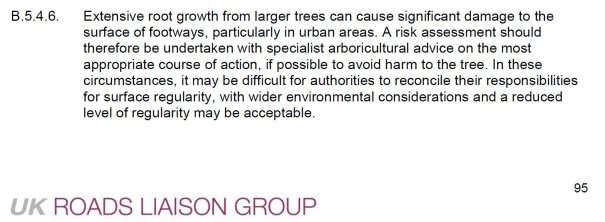
Sheffield #TreeTruths 5: A zero tolerance approach to displaced kerbs or surfacing is a valid reason to remove healthy street trees? Sorry, no its not, according to the government endorsed UK Roads Liaison Group Code of Practice!

Sheffield #TreeTruths 4: @hortweek explains how CAVAT is a credible way of valuing street trees. https://t.co/GCKIauKEV8. Sheffield City Council should read this before felling commemorative trees in Western Road. They are at the top end of the value spectrum.

Sheffield #TreeTruths 3: Trees make places nice to live in and people proud of their communities. This is Sheffield City Council’s approach to place making. There is no credible technical justification for this type of management.

Sheffield #TreeTruths 2: Street tree management in Sheffield is a local issue? I don’t think so! The industrial scale felling of healthy street trees being implemented by Sheffield City Council is unique and it has a big international profile.

Sheffield #TreeTruths1: Tree roots damage services? – I have seen no evidence in Sheffield. Trees rarely damage services, evidence is thousands of street trees in Sheffield not doing so, & millions around the world coexisting with services.

Tagged with: , , , ,
Posted in Blog, Healthy Felling, News

How court case raised political stakes in Sheffield tree-felling saga – Yorkshire Post

Sheffield Council has won a critical legal battle against anti-tree felling protesters – but the political stakes in the saga have been raised once again. Chris Burn reports.

As Mr Justice Males convicted a retired primary school teacher, a university lecturer and a French magician for breaching a court-ordered injunction banning ‘direct action’ protests against the controversial felling of thousands of street trees in Sheffield, his decision appeared to vindicate the city council’s decision to bring legal action against the campaigners. But the jury remains out on what the verdict will be in the court of public opinion.

Tree felling works are currently on hold across Sheffield.

While large parts of the three-day hearing at the High Court in Sheffield that finished yesterday afternoon were taken up with technical discussions of legal precedents and what precisely constitutes a ‘safety zone’ – the area around a tree due to be felled that protesters are barred by the terms of the injunction from entering – a greater political drama was unfolding at the same time outside the courtroom.

Just a week before the case, Councillor Lewis Dagnall, the new man in charge of overseeing the council’s tree-felling strategy, who had arrived in post in May with a promise of ‘compromise’ with campaigners following bruising local election results for Labour in areas of the city most affected by the policy, told BBC Radio Sheffield there was nothing he could do to stop the proceedings progressing as he was “insulated from the legal process” and had not been involved in a decision made by council officers.

But on the hearing’s first day on Tuesday, the judge insisted on knowing if the legal action seeking to commit four protesters to prison for contempt of court was being supported by the council’s Labour leader, Julie Dore, as he wanted reassurance “this application is brought on the instructions of democratically-elected councillors”.

In contrast to Coun Dagnall’s remarks, Yaaser Vanderman, the barrister representing the council, said while the ultimate decision rested with the council’s legal director, “there will have been input from the relevant council members, including the leader”. He then clarified that Coun Dore had “positively agreed” that the proceedings be brought and was “happy” with them taking place.

Sheffield Council leader Julie Dore

In the following days, Coun Dore has faced mounting political condemnation for her involvement in the decision, most notably by members of her own local party.

On Tuesday night, the city’s Crookes and Crosspool Labour party branch passed a motion that noted “with dismay” her involvement with the decision and called for legal action to be halted. Yesterday morning, Lee Rock, part of the branch’s executive, addressed tree campaigners outside court to reiterate the condemnation. He said: “The final straw for us was this week when the judge asked if the Labour council are supporting these injunctions and the potential imprisonment of citizens of Sheffield. We don’t accept, as socialists in the Labour party, a Labour council that seeks the imprisonment of protesters.”

The Sheffield Not-For-Profit branch of the Unite union also condemned the move, saying “no senior Labour Party figure should ever endorse the imprisonment of protesters fighting for justice”. On social media, several local Labour party members shared resignation letters they had sent the party over the issue.

Coun Dore also came in for fierce criticism from opposition councillors during a stormy council meeting on Wednesday, as she reiterated her support for the legal action while insisting the decision had been made independently of her.

Following the verdicts last night, Shaffaq Mohammed, leader of the Liberal Democrat group in Sheffield, said the decision to pursue the prosecutions showed it was “business as usual at the council” despite the recent promises of compromise and a change in direction.

“What we thought was an olive branch turned out to be a prickly stem,” he said. “We’ve seen a council determined to punish people who don’t agree with them.”

The issue of tree-felling in the city has been a thorn in the side of the council’s Labour administration following years of growing protest, with thousands of people now members of what is known as the Sheffield Tree Action Groups. Campaigners believe healthy trees are being unnecessarily felled for contractual reasons.

Last summer, Sheffield Council, which has insisted trees are only removed as a ‘last resort’, decided to pursue civil injunctions to prevent protesters standing directly under trees due to be felled as campaigners used the tactic successfully. In June 2017 alone, 329 of 427 attempted tree-felling operations had to be abandoned.

But the imposition of the injunctions in August last year was not the success the council hoped for as protests continued. Private security guards hired by Amey were brought in to enforce the order and, following heated clashes in January, felling was temporarily halted. It started again in February, with a greatly increased police presence seeing dozens of police officers sent out each day alongside the security team to oversee operations.

Growing protests followed, along with multiple arrests – most notoriously including a woman who had been blowing a toy trumpet at a demonstration.

At the same time, new revelations about the contract, including the existence of a previously-unknown target to replace 17,500 of the city’s 36,000 street trees, came to light. The council say the figure merely represents a form of insurance to provide ‘financial cover’ should that many trees need to be removed in the event of an outbreak of disease and the true number is more likely to be about 10,000. But it is unable to explain how a ‘financial adjustment’ that it says will take place at the end of the contract if fewer than 17,500 trees are felled would work in practice and whether it or Amey would benefit.

The situation brought national condemnation from figures as diverse as Environment Secretary Michael Gove and former Pulp singer Jarvis Cocker and in March, work was put on hold once again to allow a review of how work is carried out to take place.

As Justice Males ruled that three campaigners – ex-teacher Fran Grace, lecturer Dr Simon Crump and street artist Benoit Compin – had broken the terms of the injunction, he said that while he expressed no view on the merits of the tree-felling programme, the rule of law must be upheld. The judge added he “would have been uneasy if an application was being made on behalf of the council to commit citizens of Sheffield to prison without the support of democratically elected councillors”.

But he also noted that while the situation has “excited some very strong emotions”, two council elections since 2016 have returned a majority of councillors who support the work and that the authority’s leadership – and their controversial tree-felling programme – are ultimately “accountable to the people of Sheffield through the ballot box”.

Council legal director welcomes judge’s ruling

The judge’s decision to convict three tree campaigners for contempt has been welcomed by the council’s legal director.

Simon Crump and Benoit Compin were handed suspended prison sentences, with no further action taken against Fran Grace. A fourth case, involving a man called Paul Brooke, is yet to be decided.

Council legal director Gillian Duckworth said: “Three individuals have chosen to break the law by ignoring a lawful order.

“It is regrettable that by undertaking these actions, the individuals concerned have endangered not only their own safety, but also the safety of workers and the general public.

“The decision to break the law was one made by those individuals in full knowledge of the potential outcome.”

Original article:

https://www.yorkshirepost.co.uk/news/how-court-case-raised-political-stakes-in-sheffield-tree-felling-saga-1-9198330

Tagged with: , , , , , , ,
Posted in Blog, Healthy Felling, News

Second report from the Crown Court – 6th June 2018

It’s official: geckoing is not, repeat *not*, a legal loophole. Mr Justice Males made the point emphatically, implicitly agreeing with STAG co-chair and defendant Paul Brooke that it is a legitimate way for tree campaigners to protest without breaching the injunction.

The judge’s remark was made in response to prosecuting counsel Yaaser Vanderman, towards the end of the second day of hearings in the trial of Mr Brooke, Benoit Compin, Simon Crump and Fran Grace for alleged breaches of the injunction forbidding the intrusion of protesters into safety zones surrounding tree works.

Owen Greenhall, acting for Mr Brooke and Mr Compin, continued the cross-examination of security guard Richard Milligan, who agreed that the principal function of security staff was the physical removal of protesters from the area of a tree felling rather than the infliction of pain: ‘You said that if a person was crying out in pain the first response would be to check that they were okay.’ The aim was to use minimal force and to reduce the risk of injuries.

In his written affidavit Mr Milligan had mentioned guards using a rocking motion to extract protesters rather than a sharp jerk, which had a greater risk of injury. He agreed that if someone was carried out as a ‘dead weight’ then it would be appropriate for four guards each to take hold of a limb. ‘But you wouldn’t punch anyone?’ No. Mr Greenhall then showed the video clip, previously played yesterday, which appeared to show a security guard throwing a punch during a fracas. Mr Milligan had not been involved but had been standing beside the evidence gatherer shooting the video. He said that he could not be sure that the clip showed a punch being thrown.

Mr Greenhall said that one female protester on Meersbrook Park Road (MPR) had been removed from park railings twice. On the second occasion, her cries of pain had led bystanders including Paul Brooke to break through the barriers surrounding the safety zone. Mr Greenhall showed a harrowing video clip of three security guards attempting to remove the woman, one by apparently lifting her up with his shoulder. A voice could be heard shouting to police off camera: ‘Officers, you’re witnessing an assault!’

At this point, Mr Justice Males interrupted proceedings to relay a report passed on to him from a barrister not involved in the case, who had witnessed the apparent intimidation of council officer Paul Billington in the waiting area outside the courtroom. The judge said that the intimidation of a witness about to give evidence was a serious matter and could itself be considered a contempt of court. A short recess was called to deal with this. When the hearing reconvened, Mr Vanderman stated that Mr Billington had not been aware of the report and that the alleged intimidation was nothing more than he was used to. Nevertheless, the judge stated that if the offence was repeated he was prepared to exclude the public from the building; he didn’t want to do this as he believed in open court, but the press were sure to report the matter.

Resuming his cross-examination of Mr Milligan, Mr Greenhall showed further video footage of the removal of the female protester from the MPR railings. He pointed out that the clip showed sharp tugs being used, not a slow rocking motion as Mr Milligan had described in his affidavit. Mr Greenhall also noted that several other security staff, including a female guard, had been standing nearby as the protester was carried away; surely they could have been employed to pick her up bodily rather than dragging her? Mr Milligan replied that he would have said they were placing her on the ground rather than dragging her.

Paul Billington then took the stand. Before admitting him to the courtroom, the judge reminded the public gallery that there must be no audible reactions to his evidence. Anyone who felt unable to comply with this should leave.

Mr Vanderman referred to the decision to fell a tree on Abbeydale Park Rise (APR) that was displacing the kerb by approximately 30mm. Mr Billington said that this was not a decision he had taken (it had been made by his predecessor, Simon Green) but one that he supported. The particular species of tree (Wild Cherry Woodstock) had an expected rate of growth of 10mm per year, so it was likely that any remedial work done on the kerb would have to be repeated in a year or two’s time. Replacing the tree with a similar species but with a slower rate of growth would give the chance of a tree with a long-term future.

Paul Powlesland, acting for Simon Crump and Fran Grace, asked Mr Billington for his definition of a highway safety zone and whether it could be erected for any reason other than to provide a safe working area. Mr Billington said that SCC and Amey’s mistaken understanding of what constituted a safety zone (that it did not include natural boundaries such as walls and park railings) had been cleared up at a previous hearing and that since then they had been adhering to the definition specified in the injunction.

Mr Powlesland drew Mr Billington’s attention to a photograph of a warning sign displayed on MPR and asked him several times if he would agree that it gave an incorrect version of the injunction wording: yes or no? (Mr Justice Males interjected to ask him to keep his voice down.) Mr Billington said that he did not recognise the sign and was not qualified to say whether its message was within the terms of the injunction: ‘If I said yes or no I’d be guessing.’

Mr Powlesland asked if Mr Billington agreed that when Amey staff say people are in breach of the injunction, protesters were within their rights to challenge them over their confusion regarding the injunction. Mr Billington said that was not aware of any confusion. There was some confusion over whether it was tree workers or tree campaigners who were confused. Mr Powlesland said that it was Simon Crump’s case that he had been confused about the extension of a safety zone. Mr Billington said that Dr Crump had been involved in the campaign from the beginning and so ‘the chances of him being confused about anything are amongst the lowest of anything in this case’.

Mr Powlesland referred to a matter discussed in a previous hearing in October, in which he had cross-examined Mr Billington over the contents of an erroneously-worded letter distributed to a number of campaigners standing in Meersbrook Park, outside of safety zones, and whether it could be construed as threatening. Mr Powlesland promised not to go there again, drawing a wry smile from the council officer, but noted that it was an example of why campaigners such as Dr Crump and Fran Grace could not take the word of SCC, Amey or Acorn because of inconsistencies in information previously emanating from them.

Mr Powlesland then referred to Mr Billington’s statement in the original injunction hearing that only 6,000 trees were to be felled. Mr Billington insisted that he been referring only to the Core Investment Period, and that previous as well as subsequent council statements and press releases had made that clear. He had never meant to suggest that 6,000 was the total number to be felled in the entire contract term.

A slide was presented showing clause 6.38 in the Streets Ahead contract specifying 17,500 trees to be felled. Mr Billington said that he could see how the contract could be interpreted to imply a target of that figure but that it was not the case. Bids for the contract had been made on the basis that up to that many trees could be replaced if necessary, without additional cost to the council. This was standard contacting procedure. But no discussions had taken place regarding any such target: ‘It doesn’t exist.’

Mr Billington did not know and could not say how many trees would be felled over the course of the contract but 10,000 was the ‘best guess’. He said that it could be argued that it might be in Amey’s best financial interests to replace less than the maximum figure, and that at some point the council might want to discuss that – ‘but that’s in 20 years’ time’. Mr Powlesland said that citizens of Sheffield wanted to know how such decisions were being made *now*. The council had not released its annual Tree Management Programmes – Mr Billington said he hoped they would be.

Mr Greenhall wanted to discuss the decision made to replace one particular tree, situated between house numbers 22 and 24 on APR. The Independent Tree Panel advice for this tree was as follows: ‘Remove 2 kerbs and replace 2 kerbs with dropper. Narrow footway by 150mm over 15m. Remove and relay 15[m] of stone edging. Proceed with engineering solution and associated work if funds available.’ However the council’s final judgment was to remove and replace it.

Mr Greenhall said that the displaced kerb was not inconveniencing members of the public. Mr Billington noted that the Streets Ahead contract specifies no undue deviation from a straight kerb line, a principle he upheld: ‘As a cyclist, I wouldn’t want *any* deviation.’ He said that he spent a lot of time cycling close to kerbs and wouldn’t want his name against a decision that could cost a human life.

Mr Greenhall said that the ITP had proposed engineering solutions to retain twelve healthy trees on APR and that the same decision had been made for all of them. Following a ‘tree walk’ on APR with Amey representatives, a resident had asked why so many trees were being felled and was told that there was no ‘appetite’ at SCC for the use of engineering solutions and that the council preferred replacement. Mr Billington said that instead of ‘appetite’ he would substitute ‘ability‘, as the ITP recommendations involved, ‘at least in part’, bespoke engineering solutions sitting outside the contract that would require additional funding that was not available: ‘If an exception was made in the case of one tree you would find yourself making them in many cases.’

Mr Greenhall said that a mistake had been made in the decision-making process in consideration of this particular proposal. Mr Billington: ‘I reject that.’

‘This is a highway renewal contract, not a patch-and-mend contract.’

Opening the case for the defence, Mr Powlesland called Simon Crump to the witness stand. He corrected a typographical error in his affidavit, in which a photograph of a warning sign had been mistakenly identified as having been taken on 15 January rather than 16 January.

Mr Vanderman said that he was a committed campaigner. 
Dr Crump: ‘I would say more of a keen amateur.’ 
Mr Vanderman: ‘You say “committed” in your written evidence.’ 
Dr Crump: ‘Oh dear.’ 
Mr Vanderman: ‘You have sat under countless trees and have attempted to frustrate tree felling.’ 
Dr Crump: ‘I don’t accept that. I’ve attempted to delay it.’
Mr Vanderman: ‘Until… what? Someone else comes along.’ 
Dr Crump: ‘No. I want to delay felling so the two parties can get together and negotiate a sensible solution.’
Mr Vanderman: ‘You intend to go on entering safety zones?’
Dr Crump: ‘Absolutely not.’

Mr Vanderman referred to a message Dr Crump had posted on the Facebook page last week in which he said that he did. Dr Crump drew your attention to the inverted commas he had placed around ‘safety zones’: ‘I would caution you not to get excited about it and remind you that I have a PhD in English literature. I choose my words and my punctuation very carefully. I used inverted commas to refer to *fake* safety zones.’ Mr Vanderman noted that the post had soon been deleted from the STAG Facebook page and suggested that Dr Crump had deleted it because he knew it would affect the case. Dr Crump could not be sure whether it was he or the page moderators who had deleted it.

Mr Vanderman referred to the incident involving Dr Crump and Fran Grace on MPR. Dr Crump: ‘It felt to me that we were standing outside of the safety zone and no-one explained to us why we were not. It felt like entrapment – they were trying to get us on something.’ Mr Vanderman said that a trap allows entry but not exit. Mr Justice Males said that there were two senses of ‘trap’: to be stopped from leaving or to be tricked into breaching the injunction. Which sense did he mean? ‘The second one.’

Mr Vanderman showed video footage of the incident and said that Dr Crump and Ms Grace had been asked to leave a total of eight times. Dr Crump said that he did not count them – the experience had been quite stressful. Mr Vanderman: ‘You could have left the disputed area at any point during those five minutes.’ He pointed out that Dr Crump had been talking to Calvin Payne on the other side of the fence, who had not been ‘drawn in’ to the area because ‘he knew a safety zone was being erected’. Mr Powlesland’s objection to this speculation was upheld by the judge.

Dr Crump said that he and other campaigners had been lied to continually by SCC and Amey; ‘they should get the wording of the injunction straight and stick to it.’ Dr Crump said he had been genuinely confused as to what was happening. ‘It was the first time they had tried this particular tactic. I also believed it was not a proper safety zone – you can hear me saying that.’ He had been ‘confused by the lies they have told us over weeks and months – they will tell us anything.’

Mr Vanderman: ‘Not once did you ask the question why the safety zone was being enlarged.’
Dr Crump: ‘I was hoping they would tell me.’

Mr Vanderman referred to the later incident on MPR: ‘I was standing near the railing with my arm around the railing, some distance from the tree.’ Mr Vanderman says that Darren Butt had asked him to leave: ‘Because it wasn’t a complete safety zone, I refused.’ Two other campaigners who had linked arms with him decided to leave the zone but he stayed. He denied having prevented the erection of barriers, which could have been placed in front of him as they had been ‘on many previous occasions’. Mr Vanderman asked why he was holding onto the railings: ‘Because people are removed, sometimes violently.’ This had happened the same day further down the street.

Mr Vanderman: ‘You knew they wouldn’t fell the tree with you standing there.’
Dr Crump: ‘No, there was a car there. It was part of the deal’

Mr Justice Males refers to the undertaking that Dr Crump had signed not to participate in direct action. Dr Crump: ‘Which is very similar to the injunction. I signed it in good faith and take it seriously. As far as I am concerned I have not broken the injunction.’

Fran Grace (who will be 68 on Friday) next took the stand. Mr Vanderman pointed out that she is a former primary-school teacher and asked if she had any qualifications in arboriculture or health and safety. She had not. Ms Grace has been involved in the campaign for about three years but stated in her written affidavit that she had become more involved after the Rustlings Road incident in November 2016. What did this mean?

Ms Grace: ‘I decided not to be an armchair activist and to become more active. I felt a lot more strongly about the issue and that I wanted to be involved.’

Mr Vanderman: ‘Including attending felling sites?’

Ms Grace: ‘Yes.’

Mr Vanderman said that ‘geckoing’ was an ‘alleged loophole used to prevent or delay felling without breaching the injunction’.

Mr Vanderman suggested to Ms Grace that the reason she stayed with Dr Crump in the ‘disputed area on MPR was because she was ‘upset’.

Ms Grace: ‘That’s not what I said. Several trees were in danger of being felled. […] I did what I usually do: take photos, talk to other campaigners, be a witness. […] I felt trapped because I had no intention of being inside a barrier – they built the barriers around me. I don’t know why they did that.’

Mr Vanderman: ‘Is it your defence that the reason for the safety zone being extended was to trap you or to get you to move away?’

Ms Grace: ‘Entrapment.’

Ms Grace accepted that she and Dr Crump had been asked to leave eight times.

Mr Vanderman: ‘The reason you stayed was because you knew they wouldn’t fell the trees with you standing there.’

Ms Grace: ‘That’s not the reason. I was genuinely confused about why they had to enlarge the safety zone when there was already a safety zone. I didn’t know if there was a legitimate reason for building the barriers around us – it didn’t make sense. I was confused and bewildered. I hadn’t gone in, they had put me in.’

Mr Vanderman: ‘I’m putting it to you that you wanted to prevent the tree being felled.’

Ms Grace: ‘If I’d wanted to prevent the tree being felled I’d have taken direct action. But I didn’t, I just stood there.’

Mr Vanderman: ‘You didn’t ask why the barriers were put up?’

Ms Grace: ‘No, but I’m not sure if I’d have believed what they said anyway.’

Justice Males: ‘Was the level of distrust such that you would not have believed anything they said?’

Ms Grace: ‘That’s precisely the point. The level of distrust between us was already so high.’

Mr Vanderman: ‘You asked about the wording of the injunction?’

Ms Grace: ‘I was asking about the legitimacy of what they were doing – whether there was a valid reason for extending the safety zone.’

Ms Grace said that on the day she had not heard what one of the security guards had said to her, as played back on a video of the incident: ‘I don’t hear very well.’ (Ms Grace had worn a hearing loop throughout the two-day hearing, including during her time on the stand, and asked for a number of Mr Vanderman’s questions to be repeated.)

In the video clip, Ms Grace was heard asking to see ‘the *real* injunction’. Mr Vanderman asked if she knew what the injunction said: ‘Yes, but I also knew that there had been at least one *other* injunction posted [in warning signs] that was incorrect.’

Paul Brooke is called to the witness stand. As he passed Ms Grace they touched hands briefly in a gesture of… solidarity? Affirming his written affidavit, he asks for a single word in his statement to be corrected: ‘intention’ should be ‘attention’.

Mr Greenhall asked Mr Brooke approximately how many other felling sites he had attended besides the one in this case: ‘I can’t be precise – in the region of approximately 40 occasions.’

Mr Greenhall: ‘Have you ever prevented a tree being felled?’

Mr Brooke: ‘Not to my knowledge.’ He had not entered a safety zone since the granting of the injunction, after signing an undertaking.

Mr Greenhall referred to an incident in which an arborist had allegedly spat at him. Mr Brooke confirmed that this was Jason Wignell, who had been called a witness for the prosecution yesterday. ‘I made a complaint to the police and have not heard that the case is closed.’ He had not been aware that Mr Wignell was to give evidence to the court before yesterday.

Mr Brooke said that on the day of the incident in question, 22 January, he had a brief conversation with Calvin Payne after arriving on MPR, in which he was told that a protester had been beaten up. He had since learned that this incident was the one in the video appearing to show an uppercut. Mr Greenhall played a video of a female protester being prised away from railings by security guards and screaming in pain. Mr Brooke had not witnessed this incident directly but later was shown the video clip by another campaigner, Alan Simpson, on his telephone.

Mr Greenhall: ‘Did you notice anything?’

Mr Brooke (with voice breaking slightly): ‘I noticed a woman being assaulted.’

Another video clip was shown of a female protester being pulled away from railings, with the sound of screams and cries of ‘Don’t hurt her!’

Mr Brooke said that during this incident he was standing about eight metres away to one side, and about a metre or two behind the Heras fencing. ‘I heard the woman scream and thought at the time that the woman was being assaulted again. At one point a security guard stood on or kicked the woman. I assumed she was in pain and being assaulted again.’

A lengthy video clip was shown depicting the fencing collapsing from the weight of the campaigners behind it, including Mr Brooke pushing it, followed by a surge of people into the safety zone, again including Mr Brooke, who swore at a security guard. After a moment he retreated back outside of the zone, kicking the now-fallen fencing. The video continued, showing other protesters chanting and forming a protective circle around a threatened tree.

Mr Greenhall asked his intentions. Mr Brooke: ‘To distract their attention and prevent the woman from being assaulted.’

Mr Vanderman said that Mr Brooke is a resident of MPR and walks past these trees every day: ‘It’s natural that these trees are particularly dear to you.’ Referring to the incidents shown on the videos, he asked if Mr Brooke was aware of any complaints being made by the victim to the police. Mr Brooke said that she could not complain because she did not want to identify herself. Other s had made complaints on her behalf but they had not been taken seriously by police because they had not been made by the victim.

When Mr Vanderman asked if he knew who the victim was, Mr Brooke addressed the judge, saying that he would prefer not to incriminate another person. Mr Justice Males said this was his right, though it might affect how he assessed Mr Brooke’s evidence. When asked again by Mr Vanderman, Mr Brooke said that he did know the victim; Mr Vanderman then asked her name, and he declined to answer. Mr Justice Males queried the point of asking, and Mr Brooke again insisted that he would not wish potentially to incriminate someone.

Mr Vanderman asked why Mr Brooke had not asked police officers on the scene to intervene. Mr Brooke said that they were too far away, and earlier in the day they had told him that they there only to observe. He noted that since the occasion under discussion police had changed their tactics and now observed more closely, standing within a few feet of protester removals. Mr Vanderman said that he knew police officers did not consider that unreasonable force was being used. Mr Brooke: ‘I knew they weren’t acting.’

Mr Brooke denied that he considered *any* use of force was unreasonable and said that he what he thought about the actions of security staff in general was immaterial: ‘I believed a woman was being assaulted *at that time*’.

Mr Vanderman suggested that he was feeling angry during the incident. Mr Brooke said that he had felt a mixture of emotions, including anger, and that it had been ‘a traumatic experience for me – it was very unlike *me*.’ Mr Vanderman said that he not entered the safety zone because he believed a woman was being assaulted but because he was angry at a tree being felled on his street. Mr Brooke: ‘Which tree, this one or the fifth?’ He said that he had been at 15 or 20 tree fellings and had not reacted in the same way.

Mr Powlesland asked about ‘geckoing’. Mr Brooke said it had been ‘referred to earlier as a “loophole”. It is not a loophole! People stand by a wall or railing so that the barriers have to be erected in front of them. Nine times out of ten, that is what happens. […] Geckoing is not about exploiting a loophole, it’s about asserting a legal right of protest.’

Mr Brooke said that arborists would not specify what size a safety zone has to be because they keep changing it as it suits them – ‘one metre, two metres. Not once to my knowledge have they ever approached a householder to ask permission or taken them through the courts to cut branches oversailing their property. What they will do is turn up at five in the morning when no-one is looking.’

Benoit Compin has elected not to testify and will stand by his written affidavit. The full video, lasting around four minutes, was played of his performance of a poem inside a safety zone where work had already ceased. Security guards are shown asking him to leave, and he argues and tries to continue before agreeing to leave.

Mr Vanderman said that he had wanted to cross-examine Mr Compin about contradictions in his statement but would instead make a list of questions to pass on to his barrister, Mr Greenhall.

Submissions

Commencing his closing submissions, Mr Vanderman stated that a ‘safety zone’ was not defined as per the injunction in the undertaking that Simon Crump had signed because the injunction had been issued after the undertaking was signed. He argued that the ‘natural meaning’ on the term should apply, which included the notion that a safety zone extended to boundary walls and railings.

Concerning the incident on 18 December, Mr Vanderman said there could be no dispute that Dr Crump had remained in a safety zone, as he was within barriers erected around a tree. He said that this is sufficient to show that he and Fran Grace were in breach of the injunction. They could not have been trapped if they had been given the option to leave, which they could have done at any time.

Mr Vanderman referred to the evidence given by security guard Ricky Learman, that there is a default practice of setting up a safety zone around a tree to be felled before the lead arborist determined how big it needed to be. He said Jason Wignell’s evidence confirmed that a safety zone was only ever extended for safety purposes, including the size of the tree and the number of staff and vehicles involved. Mr Vanderman said that Dr Crump and Ms Grace had not asked why the zone was being extended, which would have been the obvious thing to do.

Mr Vanderman stated that Dr Crump had also said the zone was not complete. Mr Justice Males corrected him: he is heard in the video evidence saying that it was ‘not a proper zone’, but he does not explain in the video why it was not (such as that it was incomplete).

Mr Vanderman stated that Dr Crump did not want to leave the area in which he was standing because he knew felling could not take place with him there. He accepted that he had been standing there to delay the felling. In the incident on 16 January, Mr Vanderman said that there could be no question that he prevented safety barriers being erected flush against the railings. It could not be to prevent himself from being removed because there were no security staff there at the time. The video of him standing there alone lasted around an hour and a half. The size of the tree meant that the barriers had to be up against the railings, according to Darren Butt’s evidence, and this was a matter of expert opinion Dr Crump was not qualified to speak about. The only possible reason for Dr Crump to be standing there was to delay the felling.

Mr Justice Males asked: ‘What limit there was on where Amey can put a safety zone? Is there a good-faith test, or a need for a reasonable belief, or do they have to be right?’ Mr Vanderman stated that it was a matter of rationality.

Mr Vanderman stated that, to the extent that there were any doubts as to his intentions, they were dismissed by his Facebook post. It was very relevant that he had deleted it. He says that he can’t remember whether it was deleted by administrators or himself, but it was only last week.

Mr Justice Males said that it would be a bit odd if the regime was different for those who had given an undertaking and those who had not – it would be disorderly if some people could be in one place and not others. He said that it could be argued that the definition of a safety zone in the injunction did not apply to the undertaking because the injunction didn’t exist when the undertaking were signed.

Mr Vanderman said that Fran Grace attended felling sites two or three times a week so she clearly knew what the injunction said. ‘I put it to her that geckoing was a loophole…’. Mr Justice Males interrupted to say that ‘It’s not a loophole, is it?’ It was a question of what the injunction did or did not allow. Mr Vanderman said Ms Grace was asked to read an injunction notice, but accepted that she may not have heard the instruction.

Mr Vanderman said that Benoit Compin accepted that he had entered a safety zone on 10 January and remained for three and a half minutes.

The hearing continues on 7th June.

– reporting by Sheldon Hall.

Posted in Uncategorized

First report from the Crown Court – 5th June 2018

It was a day of two gasps, bracketed by a pair of curve balls.

The trial of Paul Brooke, Benoit Compin, Simon Crump and Fran Grace began with a lengthy preamble about procedural technicalities. Also discussed was the question of whether the testimony of two expert witnesses brought by the defence counted as either expert or relevant. The judge ruled that, for the time being at least, it did not.

But after more than an hour of tedious formalities Mr Justice Males gave his first showstopper. ‘Judges, like everyone else, occasionally read the papers’, he said, noting the present ‘moratorium, for whatever reason’, on tree-felling. Seeking the committal to prison of four Sheffield citizens was a serious matter: did it have the backing of democratically-elected councillors, and not just unelected council officers?

Yaaser Vanderman (acting for Sheffield City Council) seemed a little thrown. He said that the ultimate decision to proceed lay with the council’s legal office, not its leader, though lawyers would have taken into account the views of council members. This was not the decisive response the judge was asking for. Abruptly, he rose and stated that he was not prepared to proceed, ‘until you can give me a clear answer, yes or no.’

This unexpected intermission gave rise to much speculation among the two dozen STAG supporters gathered in the public gallery. Who would take responsibility for the decision to prosecute? Was there indeed a ‘separation of powers’ as recently claimed by Cllr Lewis Dagnall?

Phone calls having been made backstage, the court resumed. Mr Vanderman reported that SCC’s legal officer, Steve Eccleston, had spoken with council leader Julie Dore the previous day, when ‘she was happy for the proceedings to go ahead’. A further conversation had just confirmed that ‘she positively agrees that proceedings should be brought’. So that made clear where the buck stops.

Mr Vanderman then introduced 25 minutes of video evidence. Technical presentation was regrettably lacking in finesse. A first attempt to run the footage from a USB stick resulted in a frozen screen and muffled sound. After much mucking about with laptops, the video clips (stretched to a CinemaScope shape, with consequent optical distortion) were eventually played from CDs. No awards for showmanship here.

The evidence pertained to events on Meersbrook Park Road (MPR) in December and January (four separate occasions), and on Abbeydale Park Rise (APR) in March. It was claimed that the videos showed the defendants inside safety zones around trees and refusing to leave immediately when asked. This, it was stated by Mr Vanderman, put them in breach of the injunction.

Seven witnesses were called to testify in support of the prosecution. Six took the stand today: arborist Jason Wignell, evidence gatherer Jake Webb, security guards Ross Henderson, Ricky Learman and Richard Milligan, and Streets Ahead account director for Amey, Darren Butt. (Council officer Paul Billington will be heard from tomorrow.)

Several of the witnesses were asked to clarify claims made in their statements that one of the defendants, Simon Crump, had remained inside a safety zone for ten minutes when video footage in fact accounted for only three and a half minutes.

Under cross-examination by Paul Powlesland, acting for Simon Crump and Fran Grace, Acorn arb Jason Wignell was asked to define what considerations determined the size of a safety zone. The MPR zone on 18 December was narrower on the park side, where it abutted the railings, than on the highway side. At one point it was extended further on the road side, with the defendants still inside it. The zone was then reduced again after they had left the zone. Why had it been extended, and why had the reasons not been explained to Dr Crump and Ms Grace at the time? Mr Powlesland argued that the extension was done not for safety reasons but to force protesters out of the area.

Owen Greenhall, acting for Paul Brooke and Benoit Compin, related another incident on MPR, when the police had facilitated a protest. Mr Wignell had been in his vehicle, frustrated at being unable to move, and Mr Greenhall said that he had spat water at protesters through his window. Mr Wignell’s response – ‘That’s not true’ – drew a loud intake of breath from the public gallery.

Evidence gatherer Jack Webb disputed Benoit Compin’s claim that he had not known the terms of the injunction before 10 January because he had previously seen Mr Compin at ‘half a dozen’ felling sites; he was recognisable by his French accent and guitar. But Mr Greenhall pointed out that in his affidavit Mr Webb had not said that he had recognised him, only that he had been ‘informed by [his] colleagues’ that the protester was Mr Compin. So how could he recall how many times Mr Compin had attended fellings before or say what he knew about the injunction?

Mr Greenhall pointed out to Mr Wignell and Mr Webb that when Mr Compin entered a safety zone on MPR, for a total of three and a half minutes, another protester was already inside and had already brought work to a halt. The protester was still there when Mr Compin left the zone. Mr Webb was asked: ‘So when you say “As a result of protesters’ actions the tree was not felled that day”, you don’t mean that *Mr Compin* prevented the work.’

There was a long, long pause – around a minute – before the reply: ‘I still believe his actions were the reason why the tree was not felled that day.’

Mr Greenhall played a video clip several times in slow motion, showing what appeared to be an upper cut from a security guard to a protester on MPR. Mr Webb denied that the video clearly showed a punch being thrown. Mr Greenhall also referred to a woman protester being knocked to the ground and dragged across the floor: ‘I put it to you that the force that was used on that protester was not reasonable force.’ Mr Justice Males asked if this was a fair question to put to a witness. Mr Greenhall responded: ‘It’s what he says in his statement – that reasonable force was used.’

Darren Butt asserted that every tree is assessed on its own merits and that the tree on MPR was due to be felled because it had dislodged a kerbstone; installing a thinner kerb would be only a temporary solution as the tree would continue to grow and dislodge the kerbstone again. Mr Greenhall referred Mr Butt to a photo of the kerb: ‘Would you agree that the displacement of the kerb is minor?’ Mr Butt: ‘I accept that the kerb is displaced.’ Mr Greenhall: ‘Would you accept it is minor?’ Mr Butt: ‘I accept it is displaced.’

Mr Butt had personally asked Dr Crump and two other campaigners to leave an incomplete safety zone on MPR. Mr Powlesland asked if anything else in the zone had prevented the felling that day, and noted that a car was parked next to the tree: would the felling have gone ahead with the car still inside the zone? Mr Butt said that parking services would have been called to remove it: ‘We don’t chop trees over cars.’ Another audible gasp from the public gallery led the judge to say that it was unfair to have witnesses’ statements commented on in this way. A security officer in the gallery took up position alongside the front row, presumably ready to eject anyone who breached decorum.

Mr Powlesland showed Mr Butt a video shot from under a tree while it was being felled and asked if Mr Butt considered the work safe. Mr Butt said that he did, having previously investigated the video and been complimented on the work by professional associates. He did not believe the branch being cut was directly over the videographer as it appeared.

Mr Butt said that he was aware that some complaints of unreasonable force had been made against security guards. Several witnesses were asked about what they considered reasonable force; Mr Justice Males noted that they can say ‘what was done and why it was done, but whether it was reasonable is a matter for me’. He referred to a video taken on MPR on 22 January in which a woman was heard to cry out in pain. The judge stated that it was not a security guard who had caused the woman to cry out but an unidentified woman on the park side who had grabbed her hand through the railings. And on that dramatic note, he rose and the court was adjourned.

The trial continues tomorrow and Thursday.

– reporting by Sheldon Hall.

Tagged with: , , , , ,
Posted in Blog, Court cases, News

Sunday Times investigation: 110,000 trees lost to council axemen | News | The Sunday Times

More than 110,000 trees have been chopped down in three years by councils across the UK — equivalent to a sixth of the size of Sherwood Forest.

A Sunday Times investigation, using freedom of information (FoI) requests, has revealed that Sheffield — where the council has caused uproar by felling about 10% of its street tree population — is only the third-most prolific city at felling. It is exceeded by Newcastle, where 8,414 trees have been felled, and Edinburgh, with 4,435. The figure for Sheffield is 3,529.

In mixed urban and rural areas the top tree-cutting councils are Wiltshire, with 4,778 , Kent, with 3,623 and Basingstoke and Deane, with 3,579. More than 70 councils said they did not keep records of trees felled, despite it being a government requirement.

Experts and campaigners say some councils are trying to save money by chopping down large-canopy trees, often in urban settings, which can be expensive to maintain.

Trees such as oak, lime, sycamore, horse chestnut and ash are targets because their roots can spread along pavements and cause damage to buildings and roads.

Large trees absorb harmful particulates that can lead to disease. However, housing and road schemes have led to culls in cities such as Newcastle, a city highlighted by the World Health Organisation as a pollution hotspot, one of many in the UK.

Newcastle city council has felled the most trees of any local authority in our study of 288 councils over the past three years. The council, however, claims to maintain a stock of 800,000 trees, including woodland outside the city, meaning it felled 1% of its population. It refused to give a figure for its felled street trees to allow a like-for-like comparison with Sheffield.

Belfast city council has chopped down fewer, 3,213, but this represents 6% of its stock. Basingstoke and Deane council in Hampshire has also culled 6%.

Edinburgh council has felled about 1,000 trees more than Sheffield since 2015. However, the city has been battling Dutch elm disease.

The true number of trees cut down in the UK is likely to be far higher. Many councils failed to respond to our request two months after the request was made.

A total of 288 councils responded, of which 201 provided numbers. A national total of 113,792 trees is recorded as being felled by councils since 2015.

The environment department (Defra) and Forestry Commission keep no record of trees felled under local authority powers. Defra said: “Local authorities should be keeping their own records.”

Seventy-two councils responded by saying they did not keep records. Some councils said the request was too costly to answer.

According to Defra, the number of trees cut down by councils equates to about 67 hectares, equivalent to more than 90 Wembley football pitches.

Some councils claim to have offset mature trees felled by replanting. However, experts say saplings cannot match the benefits of a mature-canopy tree.

“It takes up to 100 years for many broad-leaved trees to reach their full beneficial potential and the next 100 years to repay those benefits to its environment,” said Simon Richmond, senior technical officer for the Arboricultural Association.

“Respected research has shown trees have an impact on improved mental health, pollution reduction, physical health, flooding and temperature control. Property values are also known to be higher in more ‘leafy’ residential areas. The benefits of trees are enormous.”

He added that in some areas trees were being lost because it is cheaper to fell than maintain them. Sheffield’s tree-felling is part of a £2bn, 25-year project called Streets Ahead. Thousands of trees, assessed by the contractor Amey as dead, dying, diseased, damaging or dangerous, have been cut down.

Paul Selby, a tree campaigner, said: “Sheffield made it very obvious what they were doing, but I think tree felling can go largely unnoticed in a lot of cities. This can happen by stealth.”

Part of the problem nationally, according to Richmond, is a cut in the number of tree officers employed by councils to maintain and champion tree stocks. “They fight the battles against planning and development departments to keep trees, to cut only when absolutely necessary,” he said.

Newcastle has removed three tree inspectors to save money. The council said: “When you visit Newcastle it’s evident just how much of a green city we are. Newcastle has a proud collection of parks and open spaces.

https://www.thetimes.co.uk/article/sunday-times-investigation-110-000-trees-lost-to-council-axemen-pjlkp6qkz

Tagged with: , , , , , , ,
Posted in Blog, Healthy Felling, News

Sheffield Council blames ‘intimidating and violent’ protesters for latest secrecy over trees

Sheffield Council has refused to reveal another key part of its official policy for the controversial felling of thousands of street trees – on the grounds that secrecy is necessary to protect staff and the public from attacks by protesters should the information be made public.

The council has rejected a request to release its annual tree management programme for 2017/18 by claiming that “increasingly intimidating and at times violent” behaviour by campaigners means publishing the information would risk the safety of both contractors and the public in areas where felling is due to take place.

According to the council’s £2.2bn Streets Ahead highways maintenance contract with private firm Amey which started in 2012, the replacement of trees with new saplings has to be done “in accordance with the annual tree management programme”.

The contract details that not less than 200 trees per year should be removed so that 17,500 of the city’s 36,000 street trees are replaced by 2037. Almost 6,000 have been removed so far.

The authority has said it now estimates around 10,000 trees will be replaced with new saplings over the course of the contract but has admitted there will be a “financial adjustment” should 17,500 not be removed.

The council response, sent on April 13 – almost three weeks after felling was paused for a review to take place following a national outcry against the policy – stated that as the programme contains details of where removals were planned to take place, publishing it would “provide information which may lead to the targeting of works sites and increase the likelihood of intimidation or physical assaults against staff and the public at those sites”.

Campaigners today said the refusal was a tactic by the council to delay the publication of information, while also being “spin” that attempts to paint protesters in a negative light.

Around 20 people were arrested between January and March at tree protests after Amey brought in private security guards to support felling operations. Dozens of police officers were sent out to support operations from February following clashes in January.

The arrests included one woman accused of a public order offence for blowing a toy trumpet at a tree protest. One day after that, a vicar carrying a tambourine and a woman with a pink recorder were both also arrested, one for obstructing the highway and the other on suspicion of obstructing a constable.

South Yorkshire Police said today one man has been charged with two counts of assault, with a number of other cases still being considered by the Crown Prosecution Service.

Benoit Compin, the main charged with allegedly assaulting two security guards in March, is to face trial at Sheffield Magistrates Court in August and intends to plead not guilty.

The council FoI response said: “The current level of tree protester action, which is becoming increasingly intimidating and at times violent against Amey employees, precludes the council from releasing up-to-date versions of the Annual Tree Management Programme due to the risk to these employees.

“Amey, and as contracting organisation, Sheffield City Council, have a duty of care to its employees and to release a programme which details where in the city staff are likely to be working throughout the year would conflict with this duty of care by enabling protesters to target work sites.

“The council considers that this documentation therefore is exempt from disclosure in order to legitimately protect the health and safety for Amey staff and in association the public at sites where works are planned.”

Tree campaigner Justin Buxton, who was charged in March with obstruction of the highway at a tree-felling protest before the case was discontinued by the CPS days before it was due in court, said: “This is a last ditch attempt by the council to do something which serves two purposes. It delays the publication of the annual tree management programme. But it is also a little bit of spin to make out the protesters are violent and cause civil unrest.”

The council also rejected requests to see the annual tree management programme for the years between 2012 and 2016 on the grounds that it intends to publish this information at an unspecified future date.

It comes after another key element of the contract, the Highway Tree Replacement Policy, was revealed by The Yorkshire Post earlier this month following a separate Freedom of Information battle with the council.

That showed the replacement policy focuses on minimising maintenance costs for new saplings while containing no mention of existing trees only being replaced as a “last resort” as the authority’s leaders had repeatedly claimed in the past.

Campaigners have requested an internal review of the council’s decision to refuse their FoI request.

When contacted by The Yorkshire Post, Sheffield Council said its position on the issue “remains the same” as what was written in the FoI and it had nothing further to add

Original article here:

https://www.yorkshirepost.co.uk/news/sheffield-council-blames-intimidating-and-violent-protesters-for-latest-secrecy-over-trees-1-9189930

Tagged with: , , , , , ,
Posted in Blog, Healthy Felling, News

Honest leaders admit mistakes

honest leaders admit mistakes - hannah northward

© Hannah Northward

Hannah Northward is studying for a Sculpture and Environmental Art degree at the Glasgow School of Art and her 2018 graduation show focusses on Sheffield street tree felling.  Entitled ‘Honest leaders admit mistakes’ she plans to exhibit the work at a venue in Sheffield following graduation.

For more of Hannah’s work visit her website.

Posted in Uncategorized

6 AM fellings and attempts to jail protestors: this is not a fresh approach

The recent Sheffield City Council elections were a powerful repudiation of council’s tree-felling policies and use of police in the service of multinational corporation Amey: Green Councillor Alison Teal, who the council has repeatedly and erroneously attempted to jail, increased her majority from 8 to nearly 1400.

Despite only a fraction of seats being up for re-election, most of them very safe for Labour, the party lost seats particulary in areas with lots of felling, and saw majorities in formerly safe wards drastically reduced.

Shortly after the election, Cabinet Member for the environment Brian Lodge resigned. He claimed this was due to the abusive tactics of protestors, but could not cite any evidence of such — instead pointing to harassment councillors experienced before there was a tree campaign. The “pause” in fellings continued. This had been called just before the election. It was supposedly due to protestors’ increasingly dangerous tactics — a bizarre claim coming on the heels of disorder arrests of middle-aged women for tooting plastic instruments while chainsaws were running, and a vicar’s arrest for assault with tambourine. As the pause continued, so did revelations in the press.

Just before the pause, we had already learned that — despite claiming otherwise — the contract with Amey contained a requirement that half of Sheffield’s street trees be felled. Then, after years of refusing to reveal it, the council was forced to publish the contents of the contract’s Highway Tree ReplacementPolicy. This, it had been repeatedly asserted, called for trees to be felled only as a last resort, if certain conditions (“The Six Ds”) held. Now we learned that the policy contained no such commitment. Instead, Amey would be allowed to fell any trees it chose, with the only specification being that replacements would be low maintenance. Campaigners had long suspected that healthy trees were being felled in order to save on maintenance costs, and now it was confirmed. These two revelations were hugely significant — not least because they showed claims that the council relied on in court to be false. These claims had played a crucial role in bringing about the injunction the council received in Summer 2017 preventing campaigners from entering or remaining in fully erected safety barriers around trees to be felled. The ruling had been based on false testimony.

With these revelations, and the clear electoral verdict on the council’s behaviour, there was reason to hope that things were about to change. Lewis Dagnall, the newly appointed Cabinet Member for the Environment, promised “a fresh approach”and “compromise”.Campaigners began to think that negotiations — long requested — might be approaching. They began to hope that the injunction and the court cases based on it might be dropped, now that their false (and arguably deceptive) underpinnings were revealed.

And yet, Sunday morning at 6AM on 21 May, we awoke to the news that all four trees in Fitzalan Square had been felled. Amongst the only mature trees in the city centre, these had been specifically designated as important to retain. The council Tree Officer wrote:

“The city centre has the lowest percentage tree cover in Sheffield and there are relatively few large trees within the area. Visually, the trees provide a natural living feature that helps to soften the harsh lines of the existing built environment. The trees play an important role in trapping and removing pollutants from the surrounding air as well as providing dappled shade for users of the square. The canopies also help to break up wind movement that may otherwise funnel between the buildings. All four trees are well established with a significant potential longevity. All are considered to be in their prime.”

Clearly, the council knew that this felling, which went against the guidance they had received, would be unpopular. And yet they went ahead.

And then, on 21 May, we learned that — far from abandoning the fraudulently based injunction — the council was taking four protestors to court for violating it, and seeking prison terms. Even though it is now clear that the felling programme is committed to destroying half the street trees in Sheffield, simply to save maintenance costs. Even though it’s obvious that the council made false claims about this, in court, when seeking the injunction that is being used for the prosecution. Even though it’s also apparent that the “last resort” claim — equally important to the court case — was absolutely untrue. Unbelievably, while claiming to want a “fresh start” and to “restore trust”, on June 5 the council will attempt to jail four protestors for up to two years each.

A fresh start that restores trust would be an excellent thing. This behaviour is nothing like that.

https://medium.com/@jennifersaul/6-am-fellings-and-attempts-to-jail-protestors-this-is-not-a-fresh-approach-f1ff467cc677

Tagged with: , , , , , , ,
Posted in Blog, Healthy Felling, News

Sheffield Council’s secret policy for tree-felling revealed

Sheffield Council’s secret contract for the controversial felling of thousands of street trees focuses on minimising maintenance costs while containing no mention of removals only happening as a “last resort” as the authority has repeatedly claimed in the past, The Yorkshire Post can reveal.

The council’s Highway Tree Replacement Policy has been made public today after The Yorkshire Post requested an internal review of a decision to keep the document secret last month.

The removal of thousands of trees and their replacement with saplings is part of a 25-year highways maintenance contract between the council and a company called Amey which started in 2012. Around 6,000 trees have been felled so far.

It was revealed in March the contract contains a target to remove 17,500 of the city’s 36,000 street trees ‘in accordance with the Highway Tree Replacement Policy, unless authority [Sheffield Council] approval has been obtained for deviation from this policy’.

The council subsequently confirmed the contract figure has not been altered but council leader Julie Dore has since said less than 17,500 trees will be removed. Work is currently on hold while a review takes place following a national outcry after dozens of police officers and private security guards were sent out to support operations earlier this year.

The contract policy, which is less than two pages long, contains no mention of the so-called ‘6 Ds’ – the criteria the council had previously said is used for deciding whether to remove trees, assessing if they are deemed to be dead, dying, diseased, dangerous, damaging or ‘discriminatory’ in preventing wheelchairs and prams for using the pavement.

There is also no mention of a series of engineering solutions to save trees that the council previously said could be used under the contract to save threatened trees from felling.

Sheffield Council challenged to prove ‘last resort’ claims

Instead, the contract policy focuses on what new saplings are suitable to be used as replacements, with one of the key considerations ‘minimising future maintenance requirements and nuisance’ – including a ‘preference for small leaves’ in choosing replacements.

It adds that ‘all tree replacement work shall be carried out in accordance with good arboricultural practice’ and the requirements of British Standards Institution for tree work.

It says that where felling is planned, ‘there shall be a period of consultation with residents to ensure they are fully aware of the replacement proposals and have sufficient opportunity to make comments or suggestions regarding the proposals’, while the choice of replacement saplings should aim to maintain ‘the visual and historical integrity of the tree planting’ on affected streets

The Yorkshire Post says: Truth being rooted out on trees

Tree campaigner Paul Selby said today: “I think the biggest shock for me in reading this is just how short, vague and high level it is. It leaves Amey with huge freedom to do pretty much whatever they want.

“The history of this dates back to the 2010 period when everything was starting to come together and they were thinking it was a great idea to get rid of half the trees. The document is all about what they are going to be replaced with, it doesn’t really care about what is coming down.”

The policy contrasts with the council’s Five Year Tree Management Strategy, which was published in 2016 and says tree-felling is a ‘last resort’, with engineering solutions to save them considered first. But an FOI response earlier this year confirmed the contract supersedes the strategy if there is a conflict between them, leading campaigners to describe the latter document as ‘worthless’.

Last month, Paul Brooke, co-chair of the Sheffield Trees Action Groups, accused the council of fabricating the strategy document, which was cited in a 2016 court decision to rule out a judicial review of felling operations in the city.

The strategy was first made public in early 2016, shortly before tree campaigner Dave Dillner went to High Court to seek a judicial review of council decisions. In April 2016, Mr Justice Gilbart rejected the application as ‘misconceived’ after citing the strategy, which had been brought to the court’s attention by Mr Dillner, as an “important document” in assessing the council’s approach to felling.

The five-year strategy for 2012 to 2017 lists six previous versions of it dating back to February 2013 on its opening page. But a subsequent Freedom of Information request by campaigners to see the previous versions was initially rejected on the grounds they were “commercially sensitive”. The council subsequently revised its position to say the information was “not held” in any form and said there was no statutory requirement or “business purpose” to retain earlier versions of the document.

Sheffield Council said documents used in the proceedings contained “legitimate information” and categorically rejected the suggested there had been an attempt to mislead the court after Mr Brooke said at a press conference that he believed the document had been produced “to provide positive evidence” for the High Court case.

Sheffield Council today said the information guiding felling decisions is found in its tree management strategy.

When asked by The Yorkshire Post if there was anywhere else in the contract outside the Highway Tree Replacement Policy that set out felling is a last resort and includes details of the ‘6 Ds’ criteria or the engineering solutions, a council spokeswoman said: “We won’t be adding anything further on this occasion other than to say that the information is available online in the Highway Tree Management Strategy.”

Original article here:

https://www.yorkshirepost.co.uk/news/sheffield-council-s-secret-policy-for-tree-felling-revealed-1-9167600

Tagged with: , , , , ,
Posted in Blog, Healthy Felling, News

STAG Steering Group meeting: 1st May 2018

Action notes

1. STAG and SCC conversations
1.1 A number of informal conversations have taken place between STAG co-chairs and senior officers at Sheffield city council.
1.2 It is understood that Amey are preparing proposals to save more trees at no extra cost to the council. These will be submitted to the council for consideration before they may be shared with STAG.

2. Legal Updates
2.1 Updates were given about potential legal cases against the city council.
2.2 Louise Timothy updated on work she and others had been doing to collate detailed information about people who had been arrested and potentially unlawfully arrested. Howells are advising on what potential actions may be taken following these arrests.

3. Urgent Fellings
3.1 There has been some issues with comms about urgent fellings that are still ongoing. It has led to some confusion and delay as Amey workers are held up while campaigners wait for further information.
3.2 Chris Rust has had conversations with Paul Billington to put in place a more structured approach to prevent this and Paul Billington has sanctioned Darren Butt to talk with Chris to agree a better comms process.

4. New Plantings
4.1 There were discussions about the new saplings being planted and whether they are suitable in all cases. Some species are not what was promised in the ITP consultation process, many are non-native and will not be similar in canopy size to the trees they are replacing.
4.2 Heather Russell agreed to set up a small subgroup to discuss this topic in more detail and agree the best way of approaching Amey and SCC about more suitable plantings.

5. New STAG Auction Site
5.1 Jane Miller has set this up but there appears to be some confusion about how it operates. Chris Rust agreed to speak to Jane to resolve things.

6. Seeds for Change
6.1 This small voluntary organisation has made an offer to Stag about organising training events. It was agreed that the offer was potentially useful and local groups are in the best position to request sessions if they want them.

7. Digital Advertising
7.1 Shelley Cockayne has been working on this plan but there have been a few delays outside of her control. Discussions took place on how the plans could be expedited.

8. Additional Tree Planting
8.1 Brief discussions took place about any crowdfunding money that may be leftover. It had always been agreed that this should be spent on additional tree planting. It was further agreed that the priority for this should be streets which currently have no trees and particularly those in more deprived areas.

Tagged with: ,
Posted in Minutes from official meetings

STAG Steering Group meeting: 5th April 2018

Action Notes

1. Get Off My Tree Rally and March
1.1 Dave Dillner asked SG members to put a call out for marshals to their local groups.

2. Sheffield Trees International Community (STIC)
2.1 Shelley had received contact from a man in London called Steve Andresier and had met him with Paul Hemmings.
2.2 On that basis she had invited him to the SG meeting for a guest slot to outline his idea for a new sub-group of STAG for those living outside Sheffield called Sheffield Trees International Community (STIC).
2.3 He has already created a Twitter account and Whatsapp group. His next plan is to set up an Instagram account and Facebook group.
2.4 His background is in marketing, he has links with celebrities and other prominent contacts and intends to use his network of contacts and the efforts of people living outside Sheffield who support our cause to create high-profile publicity for the campaign.
2.5 All steering group members were content to except his plan to form STIC as an affiliated group of STAG on a trial basis.

3. Chair of STAG Steering Group
3.1 Rebecca Hammond had requested to stand down from the position of co-chair some time ago. No candidate had been immediately forthcoming but recently Paul Brooke had become prepared to nominate himself for the position.
3.2 Following a discussion on the mandate of each steering group member to speak on behalf of their groups, a vote took place and, other than one abstention, there was unanimous support for Paul as co-chair.
3.3 Chris, Paul and Rebecca agreed to work together on a set of statements to be put on Facebook in the next week that announced Rebecca’s resignation and Paul’s election.

4. Minutes for STAG Steering Group and observers.
4.1 Steering Group members agreed that brief action notes of the steering group meeting should be published. Paul Hemmings agreed to prepare these but explained there would be a delay owing to holiday commitments.
4.2 On the subject of observers at Steering Group meetings, this proposal was rejected owing to the frequent sensitivity and confidentiality of topics discussed, although guests will be invited to individual agenda items where appropriate as has always been the case.

5. Legal Matters
5.1 Paul Brooke gave a very brief update on the four people facing committal proceedings for alleged breach of the injunction.
5.2 Things are still on hold because Justice Males is currently unavailable.
5.3 Chris gave a brief update on potential pro active action against the council that Stag legal group has been working on.
5.4 Paul Powlesland is prepared to provide a barristers opinion when he receives appropriate evidence.
5.5 Chris and Paul Selby agreed to work together to prompt faster action.
5.6 Paul Selby gave an update on progress on a potential legal case.

6. Moderation of Facebook Page
6.1 Steering Group re-affirmed support for the moderators who face some severe challenges at times.
6.2 Paul Brooke agreed to take up one specific issue of abuse of moderators with the person concerned and ensure that the consequences of any re-occurrence of the issue are understood.

7. Negotiations with SCC
7.1 No sign of overtures from SCC or Amey, and local Steering Group members were asked to make this clear to the groups.
7.2 It was confirmed that STAG could not and would not direct local groups how to communicate and provide forums for debate in their local areas.
7.3 It was agreed that the documents that Steering Group had agreed in November and December remained a good starting point.
7.4 Feedback from all of the local public groups on how any future negotiations should be approached would be brought back to the next STAG Steering Group meeting.

8. Funds Update
8.1 Chris gave an update on STAG funds which are now relatively healthy.
8.2 Some funds will hopefully be used to fund any proactive action which may be required.
8.3 Noted that the four people for committal proceedings will have their defence paid for by legal aid. Any resulting fines may need STAG financial support.

Tagged with: ,
Posted in Minutes from official meetings

Felling healthy trees is no ‘trivial matter’ – The Star

https://www.thestar.co.uk/news/your-say/felling-healthy-trees-is-no-trivial-matter-1-9159554

Tagged with: , , ,
Posted in Blog, Healthy Felling, News, Uncategorized

Street fighters – Protests, petitions, planting and paints. It takes all sorts to stand up for street trees -Woodland Trust

Street fighters

Protests, petitions, planting and paints. It takes all sorts to stand up for street trees.

The UK’s towns and cities have a long tradition of street trees.

They’re part of our urban identity. We’re rightly proud of London’s planes, of Edinburgh’s leafy parks, of Bristol’s green reputation.

Millions of trees line our streets, squares and city roads, a green network that breathes life into grey and busy places. And with more of us living and working in towns and cities than ever before, they couldn’t be more important.

But our street trees are under attack.

The situation in Sheffield has dominated headlines. The city has become synonymous with tree felling, controversy and public outcry. Pictures of grandmothers woken from their beds, residents being arrested and trees lying felled with ‘save me’ love hearts still attached have caught national attention.

And many more healthy trees are still condemned to death. Their crimes? Nudging kerbstones out of place. Dropping those deadliest of urban hazards, leaves. Obscuring the view (of other buildings). Quite the rap sheet.

Whatever the justifications, the maintenance cost for their care can be a real concern, and cash-strapped councils may be tempted to turn to quick, cheap fixes.

But it doesn’t have to be this way.

Living history

Street trees have long been symbols of status, wealth and prospering communities.

The Victorians really set the standard. In the mid-1800s, the fashion for tree-lined boulevards in the cities of continental Europe led to calls for street tree planting here in the UK. Expanding towns would absorb field boundary trees and incorporate them into street designs. There were even the beginnings of recognition for the health benefits of street trees at a time when urban poverty and class divides were hot topics.

Today, we enjoy the fruits of our ancestors’ labours.

“The people in those Victorian streets are smiling and proud of their newly planted trees, now grown into beautiful mature trees.”

Mark Johnston, ex-tree officer and author of Street Trees in Britain: A History

Mark spent years researching the connection people have felt to urban trees over the centuries and their place in modern urban life. They tell a story of where we’ve come from, of community cohesion and of traditions, folklore and pride. He stresses that it’s impossible to capture the value of our oldest street trees in purely financial terms.

“They’re more than just current environmental assets. They’re part of our heritage and the history of our communities. They’re the most amazing living things in our streets. If we lose them, we lose part of our history.”

Good neighbours

Urban trees hold historical and cultural significance. They’re part of our urban heritage. They’re landmarks. Old friends.

But they also serve us in other ways.

They clean our air. They shade our pavements. They lift spirits, feed wildlife and beautify our surroundings. They even increase the value of our homes.

Without trees, our towns and cities would be very different places.

What do street trees do for us?

They create habitats
for wildlife

Trees provide homes and food for birds, insects and other wildlife

They promote
health and wellbeing

People exercise more and feel
better around trees

They prevent flooding

Trees intercept rain water and can even slow floods

Trees improve air quality

Trees reduce air pollution and keep our cities shaded and cool

Trees elevate house prices

Houses are worth more and sell
quicker on streets with trees

Despite their best qualities, street trees suffer from something of an image problem. Poor public perception, apathy and misinformation compound the problems trees face and spur local authorities to make ill-informed management decisions.

But how can we fight these misconceptions? How do we raise the profile of our trees and build an understanding of their crucial importance? How do we transform a perceived cost into an investment and persuade both councils and residents that street trees are worth it?

Our trees are not alone. They have a voice in the passionate people across the UK, from all walks of life, using a number of means to stand up for trees they love.

Meet our street fighters.

The Campaigner

Paul Selby,
Sheffield Tree Action Groups (STAG)

More than 5,000 street trees have been felled in Sheffield to date. In all, around half the city’s trees are marked for replacement, many of them healthy, well-loved and in the prime of their lives.

Local tree action groups have sprung up across the city in response to the felling, organising petitions, demonstrations and campaigns to raise awareness.

“There is a myth out there that the campaigning is all about saving every single tree when that’s not the case,” explains Paul, a campaigner with Sheffield Tree Action Groups. “Around 10% of the trees probably do need to be felled, whether that’s because of disease, severe damage or danger, but having spoken to experts – whether highways or arboriculture experts – 90% of the trees should be saved. That’s what we’re all about – to have transparency. To have proper consultation and engagement with residents. To make sure that a tree strategy is followed and an evidence-based approach is taken so that trees are only felled when necessary.”

The campaign has raised the profile of street trees and brought the issue into the public eye. So far, something like 300 trees have been saved. One in particular really brings the loss home for urban wildlife.

One of the few mature elms to have weathered the devastation of Dutch elm disease stands on Chelsea Road. Itself a rare survivor, it’s home to a colony of endangered butterflies that have narrowly avoided being wiped out.

“It’s not until you realise what’s going to be lost that you put a value on it,” Paul says. “As you’ve probably seen from the media footage, people are willing to put their freedom at risk – to potentially be locked up or be given huge fines – to save their healthy street trees. That’s how much Sheffield residents love their street trees, and we’re known across Europe and the world for it.”

Paul thinks people should feel empowered to fight for street trees, and that together they’re a force to be reckoned with.

“There are people in this campaign who don’t have a lot of expertise or knowledge of nature and wildlife – some of them don’t even know what species the trees are – but they do know the benefits they bring. People are willing to fight to save their street trees.”

And his message for councils? “Don’t underestimate the importance of street trees to people and don’t underestimate their value. They’ve got more benefits than the cost of felling. Take that into account, be transparent and open in your decision-making, consult residents properly, and what you’ll find is you can get rid of the unhealthy trees without controversy. You can work together to actually save trees.“

The Planter

Sandy Kerr,
Helensburgh Tree Conservation Trust

When Sandy moved to Helensburgh in 1975, he knew it was the town for him. “There’s a mile of flowering cherry trees in spring,” he says. “What a fantastic place to live.”

The town is a bit of a well-kept secret. It has a long history of tree appreciation. As early as 1875, local people demanded the planting of trees, and it’s thought some of the oldest cherries still flowering today may be examples of those original pioneers.

Many other trees have been planted in the decades since, and in spring the streets produce a stunning display of blossom celebrated with their very own festival. Its beauty has earned the town the nickname ‘the Garden City of the Clyde’, and it’s even one of the National Tree Collections of Scotland – the only street tree representative on the list.

Helensburgh’s grid layout and wide verges are perfect for accommodating street trees, but they’re not without their costs. Government reform and budget cuts meant that no new planting or tree replacement was on the cards. With some of the established trees coming to the end of their life, residents decided to take matters into their own hands.

The Helensburgh Tree Conservation Trust was formed.

Residents pay a small annual membership fee to belong to the charity. These proceeds are used to purchase saplings from a Scottish nursery and fund planting across the town, replacing trees lost to disease and storm damage and in-filling gaps in the display. A team of local volunteers then look after the trees, repairing supports and keeping the trees in good nick. Some 1,000 trees have been planted to date.

“We want to look after the treescape of Helensburgh,” Sandy says. “We’re trying to maintain the character of the town by doing what would previously have been done by the council. We don’t have the powers of a local authority so our job can be difficult at times, but the vision is that we can help ensure Helensburgh continues to be a great place to come and enjoy the trees.”

Sandy’s forestry and ecology background stood him in good stead as a trustee for the charity, which has become something of an authority in the town. “People come to us to ask about taking down problem trees,” Sandy tells us. “We use it as an opportunity to advise. We ask them to consider replacement planting in their gardens, for example. And we involve the community. One of our successes has been planting in one of the local council housing schemes where everybody told us they would be vandalised. We involved the youngsters there and they weren’t vandalised – they’re very proud of their street trees and so are we!”

The Artist

Sarah Deakin,
Street Tree Art Sheffield (STARTS)

Art can offer people a way to express themselves, and the brush is sometimes mightier than the sword.

For some residents of Sheffield, what started as a simple way to appreciate street trees among friends has quickly grown into something much more.

“Myself and another colleague set up STARTS just under a year ago,” Sarah tells us. “Two of us decided to do some painting sessions after a very fraught summer. It’s a very gentle, passive way of getting the message across to people who might not be aware of what’s going on or who don’t want to see an active protest – they might feel a bit threatened talking to people in that sort of situation. So it’s a much more gentle way of just sharing our love of the trees.”

The movement caught on. It’s become a way of supporting residents who have been affected by the felling of trees, and it’s resonated with many.

“We had a call from an area in Sheffield where there had been some quite difficult situations between residents,” Sarah remembers. “Some wanted the trees down, some wanted to keep them, and there was aggression and animosity. A lot of residents didn’t feel their voices were being heard although they wanted to keep their trees, so they asked if we’d go there to show support.

We did the following week, and 30 people turned up to paint and draw. We realised then that this was going somewhere. It was something that people needed.”

And with a little help, the movement has grown.

“The Woodland Trust got wind of what was going on. We set up as one of their Tree Charter groups and they gave us some funding to put on an exhibition.”

Hundreds of children, beginners and established artists attended a mass paint-off of all the trees on Western Road, some of which are threatened by felling. Planted as a memorial to former school pupils lost to the First World War, they’re a poignant reminder of the connection between trees, communities and our history. The exhibition that followed attracted national media attention and sent a message that couldn’t be ignored.

Crucially, celebrating street trees through art has offered people a way to contribute to the cause without confrontation.

“I think there are a lot of people whose mental health is being affected by what’s happening. People are really grieving the loss of their trees, but they don’t necessarily want to go out and actively protest. Our art sessions not only raise awareness of the wider campaign to save street trees, they provide people with a refuge and a place to be at peace and be calm. ”

The Resident

Alice Whitehead,
Northampton

For Alice, trees are in the blood.

“Trees have always been really important to me. My dad is a landscape historian and he’s spent much of his life trying to protect trees on landscapes with Tree Protection Orders, so it’s sort of ingrained in me.”

Alice is a freelance writer. She lives on a street in Far Cotton that was once lined end to end with trees. Today, square patches of mud mark some rather conspicuous absences between the few remaining survivors.

“When we moved here 12 years ago, there were roughly 20 trees in the street. Then every couple of months, I would see a team come out and chop one down. Mostly it was trees that had either got diseased or died, but they’d occasionally chop down healthy trees where they were leaning into houses and they’d received complaints about shading.”

Alice’s frustration is evident. The removed trees are not replaced, and those that are struggling but might otherwise be saved seem consigned to felling without consultation with residents. “I felt like something could be done about the disease or the decline of some of the trees to try and save them,” Alice says. “I asked a tree officer about it. He said they’re dangerous and it’s all about health and safety. If a branch falls off, that’s that, so we have to take it down now. They cut them to stumps – you’ll see one up the road – which just looks awful. Eventually they come along and dig them out with a grinder.”

Determined to make a difference, Alice resolved to rally the support of her local residents and show decision makers just how valued her street trees are. Armed with one of the Woodland Trust’s Street Trees Celebration Kits, she held a street party and used her blog and social media presence to collect signatures for a petition to present to councillors.

She’s also an ear to the ground for the Woodland Trust. Northampton Council is soon to be dissolved, and money is tight. By alerting the Street Trees campaigning team to these budget concerns, the Trust has been able to approach council officers with advice and offers of assistance. There’s a chance a cost-effective solution might be found.

Alice knows just how important it is to get this message across.

“You create this incredible bond with trees. They become part of the fabric of your life. When the blossom comes out it really lifts you in the spring. You come out of winter blinking like a mole out of the darkness and there you are looking up at the trees with the beautiful blossom.

There’s so much evidence to show that they help mental health and even the cohesion of society. People come together more in leafy surroundings and areas where there are more trees. It’s incredible the effect they can have on people’s wellbeing.

That’s what councils miss when it comes down to costings – it’s not a cost, it’s an investment, and that’s what councils need to see. These trees are an investment in your community and in your environment.”

The Professional

Jeremy Barrell,
Barrell Tree Care

When Jeremy advises on street tree management, he speaks from experience.

With a background in practical tree work, he now acts as a consultant, sharing examples of exemplary tree husbandry from cities across the world and challenging poor decision-making.

“Here we have an example of where a council has bent over backward to accommodate trees,” he says, indicating to the bases of several mature oaks lining a street in Surbiton that’s named for their presence. The trees encroach a little way into the road, but rather than remove them, highways authorities have simply diverted yellow lines around them.

“You can see they’ve recently been pruned back,” Jeremy continues, pointing into the canopy as a small flock of parakeets screech past. “Trees of this age need regular maintenance like that to keep them manageable. I’d estimate they’re around 140 years old, and they’ve got many more in them yet.”

But not all of the examples Jeremy brings to mind have been so positive. He’s still frustrated by the removal of an avenue of historic horse chestnuts on Tooting Bec Common in Wandsworth. “Their removal illustrates exactly what I’m talking about – local politicians being out of touch with the wishes of the local community and hijacking technical arguments to get rid of trees.”

Jeremy suspects that in some cases, expensive management solutions are over-engineered because they benefit contractors. He also wants to combat the lack of expertise and understanding that can lead to inappropriate measures being taken.

“Planting trees remote from people is not sustainable mitigation for felling street trees close to people,” he says – just one example of the ill-informed solutions offered up. “People don’t always want trees right next to their houses but they do want access to trees because of the benefits they provide. Local councils are not listening to those requirements.”

But Jeremy is hopeful about the future. He thinks the tide is turning, and that by increasing pressure and working with decision-makers through groups like the Trees and Design Action Group (TDAG), attitudes to street trees are changing for the better.

“One of the things we’re working on is trying to get central government to understand that there is a problem. They’re starting to listen and I think over the next few years we’ll start to see changes in strategy and policy that will make local authorities take account of these environmental assets.”

A council perspective

No one wants to see scenes of needless destruction, distressed residents and confrontation. It’s bad for publicity, bad for trees and, ultimately, bad for people.

As well as supporting the important work people like our street tree fighters are doing, the Woodland Trust works closely with local authorities to put good street tree management into practice. A number of them are already doing great things.

Elton Watson is a tree manager for Wrexham County Borough Council, one of the first to sign up for the Woodland Trust’s Street Tree project. He recognises the value of street trees and is always looking for better ways to keep them a part of the community.

“Anything we can do to improve is a good thing – trees play such an important role,” he tells us. “Access to good quality green spaces encourages exercise and improves mental wellbeing. Given the choice, people would rather live near green spaces. Of course trees can damage highways and footways, but that has to be balanced against the benefits. We want residents to enjoy trees and see them as a positive, not a nuisance.”

After surveying the borough’s street tree stock, the council set out a Tree Strategy that has received much support. Tree cover will be increased, and the replanting of lost trees will be planned for the long term, counteracting the effects of climate change with hardy species suited to life in an urban environment, and mitigating the risk of disease by varying the species selected.

“We aim to maintain mature tree cover in perpetuity for as long as we can,” Elton explains. “Where it makes sense we’ll plant native species, but it’s also about the right tree in the right place.”

Now it’s your turn.

The future of our street trees can be a bright one. But we have to demand it.

The government has pledged to plant 1 million more trees in towns and cities and that councils will be given new duties to consult with residents before any felling takes place. A recent report on urban canopy cover shows us lagging behind our European counterparts at the moment, but with a little effort we can improve on our record.

If you’ve been inspired by any of the stories you’ve read and want to champion street trees where you live, sign up for a Street Trees Celebration Starter Kit. Hold an event in your street. Petition your local councillors. Celebrate your trees and show others just how much they mean to you.

Together, we can all fight for street trees. The Woodland Trust is behind you.

Sign up for a Street Trees Celebration Starter Kit

Author: Amy Lewis
Photography and film: Phil Formby
Graphics and build: Simon Hitchcock

Historical images: courtesy of Mark Johnston from Street Trees in Britain: A History,available from Oxbow Books or on Amazon
Additional images: iStock

Tagged with: , ,
Posted in Blog, Healthy Felling, News

New Sheffield trees political boss promises ‘compromise’ with campaigners – Yorkshire Post

The new politician in charge of Sheffield’s contentious tree-felling programme has says he hopes to find a “compromise” with campaigners on the issue.

Labour councillor Lewis Dagnall told BBC Radio Sheffield he would be taking a “fresh approach” to the policy of felling thousands of street trees and planting saplings in their place after replacing Bryan Lodge as the cabinet member for Environment and Streetscene this week.

Councillor Bryan Lodge resigned from his cabinet position this week.

Councillor Bryan Lodge resigned from his cabinet position this week.

Coun Dagnall described himself as an “environmental socialist” and said he intends to speak to people across the city on finding a solution to the issue as he takes up the post next week.

The work, which is part of a £2.2bn highways maintenance contract with a firm called Amey, is currently on hold following a national outcry against the policy after dozens of police officers and private security guards were sent out to support operations following growing protests.

It was revealed in March the contact contains a target to remove 17,500 of the city’s 36,000 street trees and a “financial adjustment” will have to be made if this is not reached by the end of the 25-year-term in 2037.

However, council leader Julie Dore has insisted this week the council will not be removing 17,500 trees, despite ongoing uncertainty about what the financial repercussions would be.

Coun Dagnall said he was looking forward to taking up the role and hoped to find a workable solution to satisfy all sides.

“It is a really exciting opportunity to work with Julie and the cabinet as a whole to try and reach a compromise on this issue and draw a line under it,” he said.

“I want to go out and listen to people across the city about where we should go next. This has gone on for some years now and we want to move on.

“We need compromise from the council, from Amey and from some of the protest groups if we are to come together and if we are to get a resolution which means we can move on.

“I think we can reach a compromise with Amey and the campaigners.”

Coun Dagnall has recently deleted his Facebook and Twitter accounts but when asked if this was related to taking up his new role after Coun Lodge cited abuse from campaigners as the reason for his resignation, he said this was not the case.

He said he removed his social media accounts earlier in the year as he wasn’t using them and was instead looking forward to engaging with people face-to-face and by email.

Coun Lodge’s departure came days after the ruling Labour party lost several seats in local elections to the Green party and the Liberal Democrats in areas most affected by the policy

https://www.yorkshirepost.co.uk/news/new-sheffield-trees-political-boss-promises-compromise-with-campaigners-1-9159114

Tagged with: , , ,
Posted in Blog, Healthy Felling, News

The Yorkshire Post says: Is Sheffield Council finally seeing the light over trees fiasco? – Yorkshire Post


It may have taken a bruising night of election results for the message to sink in where years of street protests and a more recent national outcry couldn’t, but there finally appear to be signs that Sheffield Council’s leadership has started to see the light over its contentious felling of thousands of street trees.

Less than a week from a night of results which saw the city’s ruling Labour party lose seats in areas most affected by the policy – and the Green councillor Alison Teal, who the authority attempted to have jailed for her part in felling protests, increase her majority from just eight to nearly 1,400 – Bryan Lodge, the council member responsible for overseeing the work, resigned as part of a cabinet reshuffle.

‘Fresh start’ hope after councillor’s resignation.

While alleged abuse from campaigners was cited as the reason for his departure, council leader Julie Dore also revealed both herself and Coun Lodge felt a new voice may help “achieve a satisfactory solution for everyone” as the authority’s contractor Amey continues to conduct a review of how felling operations are carried out.

In stark contrast with a combative council statement in March that blamed the “increasingly dangerous tactics” of protesters for work being put on hold, Coun Dore said she had been recently meeting with campaigners as the council continues to discuss “concessions” with Amey. She also insisted fewer trees than the 17,500 figure outlined in the contract will be removed.

Many questions remain – for one, the authority has previously admitted a “financial adjustment” will have to be made if fewer than 17,500 trees are replaced but won’t reveal whether it or Amey would be the party to lose out.

However, there is now cautious hope that the council has at last twigged a change in approach is needed
Read more at:

https://www.yorkshirepost.co.uk/news/the-yorkshire-post-says-is-sheffield-council-finally-seeing-the-light-over-trees-fiasco-1-9156812

Tagged with: , , , ,
Posted in Blog, Healthy Felling, News

‘Fresh start’ hope after Sheffield tree-felling council boss quits post – Yorkshire Post


Campaigners have called for a change in approach to Sheffield’s hugely controversial tree-felling programme after the politician in charge of the project resigned days after local election results saw the city’s ruling Labour party lose seats in areas most affected by the policy.

In a statement posted on Facebook, Bryan Lodge, who had been cabinet member for Environment and Streetscene for two years, said “nasty, aggressive and personal abuse” had been directed towards “awesome” council officers involved in implementing the policy. Lewis Dagnall is understood to be Coun Lodge’s replacement.
The work as part of a £2.2bn PFI contract with private firm Amey to remove thousands of street trees and replace them with saplings, is currently on hold in the wake of a national outcry against the scheme following the use of dozens of police officers and private security guards during operations.

In March, the council was forced by the Information Commissioner to reveal the 25-year contract contained a target to replace 17,500 of the city’s 36,000 street trees.

While Labour maintained its majority in last week’s local elections, the Green Party took two seats from Labour and in Nether Edge and Sharrow emphatically increased the majority of Councillor Alison Teal – who was arrested and taken to court by her own council for protesting against felling in her ward – by nearly 1,500 votes. The Liberal Democrats also took three seats from Labour.

Coun Lodge is the fourth person to hold the cabinet post responsible for the contract since the deal started in 2012 and it is understood he will be replaced in the role by Coun Lewis Dagnall.

Coun Dagnall’s partner is Sheffield cabinet member for finance Olivia Blake, the daughter of Leeds Council’s Labour leader Judith Blake. He was unavailable for comment when contacted by The Yorkshire Post but prior to his appointment being confirmed, council leader Julie Dore told BBC Radio Sheffield that the change may assist with the continuing talks with Amey as the company reviews the way tree-felling work is carried out
She said: “Amey have finally come to the table to consider and discuss concessions. We have spoke to STAG [the Sheffield Trees Action Groups] about this. I have had meetings in the last several weeks with different representative groups of the protest movement.

“We are in a pause and I think Bryan thinks in the round it is easier for him and certainly for the council and in the interests of all the citizens of Sheffield if during this pause someone else takes over and helps us achieve a satisfactory solution for everyone.”

Coun Dore said Coun Lodge’s departure had been a mutual decision and said he had been subject to “an enormous amount of personal abuse” because of the tree-felling issue. She said: “Over the last several weeks, Bryan has been expressing concern about his ability to continue in his role because of the impact on his family and his own personal health and wellbeing. It has been an extremely stressful period, especially for Bryan but for all of us on the cabinet.”
Coun Dore said fewer than the 17,500 trees figure contained in the contract will be felled.

“We are not going to remove 17,500 trees, I have made that clear,” she said.

The council has previously suggested around 10,000 will be felled and the contract figure represents a form of “insurance” for the council should there be an unexpected outbreak of tree disease and more need to be removed than expected.

However, the authority admitted in March that if fewer than 17,500 are removed, a “financial adjustment” will be made to the contract. But it said it cannot yet say how the “adjustment” would work and whether the council or Amey would lose out financially.

Tree campaigner Paul Selby said he had mixed emotions about the news. “I’m actually quite sad for Bryan Lodge – having met him, I think he is a nice guy who has been misadvised. But hopefully this is an opportunity for a fresh start.

“I would advise Lewis to seriously question his officers rather than taking everything as read.”
Shaffaq Mohammed, Leader of Sheffield Lib Dems, said: “Clearly things have become very difficult for Coun Lodge because of the decisions taken by this Labour council.

“The local election results showed a massive swing from Labour in the wards of Nether Edge and Crookes where trees have been particularly under threat.

“The challenge will continue unless the new Cabinet Member can come up with a fresh approach. I hope Coun Dagnall doesn’t continue to make the same mistakes.

“Sheffield has voted for something different. People are not happy with this policy and want change. We can’t keep going on as we have.”

Green councillor Alison Teal, who was arrested during a tree protest, said the swing from Labour in the council elections showed “clear dissatisfaction” with how Labour is running the city.

“It is clear that Coun Lodge had profoundly mishandled the tree felling by private contractor Amey, and entirely lost the confidence of Sheffield people.

“We have already lost more than 5,000 mature, healthy trees that could still be cleaning up our air, improving our wellbeing and catering to our wildlife. They can’t be returned.

“It would be deeply frustrating if the new Cabinet Member just ploughed on but we have to be optimistic that Coun Dagnall will try to do something different.

“My message would be please listen to the experts and speak to the campaigners and take all these messages on board. Work with the community rather than aggressively forcing through this deeply unpopular programme.

“We need a innovative, sustainable, holistic approach which takes account of the vital importance of maintaining canopy cover across the city.”

Coun Lodge’s resignation is part of a cabinet reshuffle that has also seen the departure of Coun Ben Curran, who was Cabinet Member for Planning and Development and recently stood against Dan Jarvis to become the Labour candidate for Sheffield City Region mayor, while Coun Cate McDonald has been replaced as Cabinet Member for Health and Social Care.
Read more at:

https://www.yorkshirepost.co.uk/news/fresh-start-hope-after-sheffield-tree-felling-council-boss-quits-post-1-9156778

Tagged with: , , , ,
Posted in Blog, Healthy Felling, News
The Felling – An Epic Tale of People Power

Innocent protest to save Sheffield’s healthy street trees turns into a nightmare, as a small group of brave suburbanites take on their Council, the police and a multinational corporation.

Crowdfunder: street trees legal fund

We are currently collecting to support the small number of campaigners who are facing court costs after cases brought by Sheffield City Council.

Heartwood TiCL trail

Walk the Heartwood Trail and find Robert Macfarlane’s beautiful charms against harm hung from some of Sheffield’s threatened Street Trees. Designed by Jackie Morris.